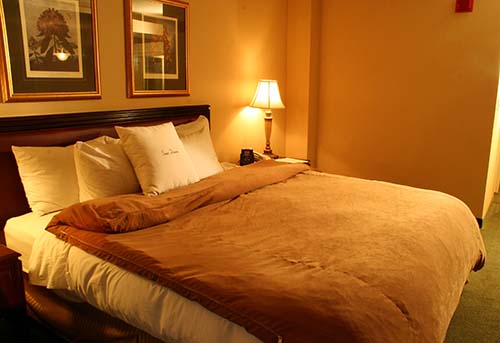
Daniel Oppliger navigated foreign airports, dealt with language barriers, and made it to his hotel in Lushui, China, only to be stumped by the TV remote at the Hilton Garden Inn.
“I couldn’t figure out how to work the television,” he says. “I had to ask the concierge to help me.”
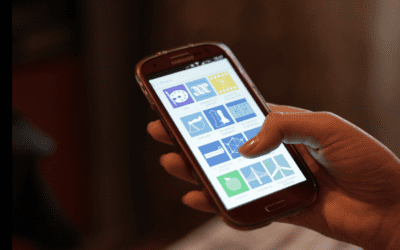
Welcome to the age of smart hotel room syndrome, when technology designed to simplify stays actually makes them more complicated.
This isn’t a glitch: 52 percent of hotels now offer tech walk-throughs at check-in where an employee explains how to use all the gadgets, according to a recent survey by Hotels.com. In other words, more than half of hotels have basically admitted their rooms are so complicated that guests need a tutorial just to operate basic functions.
It’s not just inexperienced guests who need help. Oppliger is a frequent traveler, who runs a travel agency in El Paso.
Or how about Mircea Dima, a frequent hotel guest and the CEO of an educational company that specializes in coding. He’s someone who knows his way around technology. But he recently found himself Googling how to switch off his hotel room lights.
“If you need instructions to turn off a bedside lamp,” he says, “the system has failed.”
Why are hotels installing complicated room technology?
 Hotels are not installing complex room control systems because they love you. The motivation runs deeper, and a little darker, than enhanced experiences.
An iPad in your room can be convenient, yes. You might be able to order a meal or a movie through it without having to make a call to the front desk. But that’s also more convenient (and profitable) for the hotel.
The tech lets hotels cut corners in other ways.
“Hotels want to appeal to guests who live with connected homes, while also managing energy use and staffing more efficiently,” says Lauren Ringel, a travel advisor with Fora Travel. “Tablets, motion sensors, and smart thermostats can make service seamless and save resources at the same time.”
That’s not all.
“These new electronics collect data on you,” explains Andy Abramson, a communications consultant who specializes in technology. “What you use, how much you consume, how long you sleep, even how long you spend in the bathroom.”
Put differently, the new technology saves the hotel money, increases sales and allows it to spy on you. But it’s sometimes also impossible for guests to use.
What happens when hotel room technology fails?
Ringel has seen the frustration firsthand. One client, staying at a luxury casino in Singapore, texted her at midnight because they couldn’t figure out how to dim the neon bar lights. Another guest in London was stuck with frozen iPad-controlled window shades.
“It’s not a great experience for guests,” Ringel says.
This isn’t an isolated experience. Kevin Heimlich, the CEO of an advertising firm, spent 15 minutes in a hotel room navigating iPad menus just to turn off lights after a long day.
Technology should be invisible, not a puzzle that detracts from experience.
The problem affects everyone. Al Schilf, a retired federal worker from Columbia, Md., spent five days at an upscale hotel in Rome “playing whack-a-button trying to turn lights on and off.”
TVs are the worst. You’d think someone like Vicki Burton, a retired detective from St. Petersburg, would be able to figure out how to get her hotel TV to change the channel from SpongeBob SquarePants, where it was set to when she walked into the room. But no.
“The remote resembled the cockpit of a 747,” she laughs. “I kept trying to just turn the darn thing off. Even that seemed too difficult for me.”
It’s even affected me. At a beach hotel in Phuket, Thailand, the master switch on my iPad failed to turn off a closet light. The solution from the front desk? Just close the closet door or unscrew the lightbulb.
Thanks, guys.


Christopher Elliott is the founder of Elliott Advocacy, a 501(c)(3) nonprofit organization that empowers consumers to solve their problems and helps those who can’t. He’s the author of numerous books on consumer advocacy and writes three nationally syndicated columns. He also publishes the Elliott Report, a news site for consumers, and Elliott Confidential, a critically acclaimed newsletter about customer service. If you have a consumer problem you can’t solve, contact him directly through his advocacy website. You can also follow him on X, Facebook, and LinkedIn, or sign up for his daily newsletter.