The first airline surcharges for fuel appeared in 2003. At that time, oil had spiked to over $40 a barrel. Today, oil is in the $80 a barrel range.
 The original fuel surcharges were in the $10 range. Today, three things are true — and none benefit consumers — but airline surcharges for fuel are included in the overall price one pays for advertised airfare.
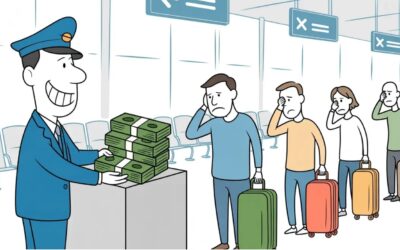
- Airlines now call them “carrier surcharges.”
- The pricing is out of hand, and worse than you think.
- They are yet another example of how airline oligopolies and monopolies hurt consumers.
Some carriers charge changeable carrier surcharges (especially non-US carriers).
 The first issue is largely semantics, but it DOES mean that some airlines can charge them, or some portion of them, even on free tickets. I have heard reports of carriers charging over $1,000, even close to $2,000, on mileage award tickets. And it means they can keep raising the fees if oil prices go up or down.
Unlike hotel resort fees, ordinary travelers cannot discover airline fees. Airlines are required to advertise the full airfare. To see the breakdown of the airfares, one needs to have access to a GDS system or work as a travel agent.
Numbers illustrate the second issue. The only way to see them is to be a travel agent or work for an airline.
A business class ticket from San Francisco to London in November, with a special promotion before Thanksgiving, could be as low as $975 base fare. However, they come with a fuel surcharge of almost $2,000. No joke. With other taxes and fees, the airfare totaled about $3,250.
 Now, that’s still not a bad price, perhaps. Still, for anyone whose company has a corporate discount or for any travel agency that gets a commission, the carrier surcharge is non-discountable and non-commissionable. Again, like resort fees, it is pure profit for the airline.
On a coach fare of $947, the surcharge was “only” $400 of the total cost of travel, although it gets more laughable or dishonest, depending on how you feel about hidden fees.
In late summer, in the same San Francisco-to-London market, there are some basic economy fares in a travel agent display for $1.00 roundtrip. Yes, $1.00. On United, British Airways, and Virgin Atlantic.
But book and price the fare, and it’s over $650 — the travel agent jargon below includes a lot of required taxes. GB is a code for British tax, which is always substantial, but the $400 YQ is the most significant amount. Here is the price as seen by the travel agency.
SFO LON 0.50KKA46LGT SFO 0.50KLA46LGT NUC1.00END ROE1.0
FARE USD 1.00 TAX 5.60AY TAX 42.20US TAX 3.83XA TAX 4.50XF TAX
7.00XY TAX 6.52YC TAX 110.80GB TAX 71.10UB TAX 400.00YQ TOT USD
652.55
The third issue has to do with monopolies. Again, the everyday traveler never sees the airline fees.
On Monday of this week, I ticketed one business class ticket for an itinerary to London. On the next day, Tuesday, I booked the second. The airfare showed $100 higher, which was odd. I looked at it, and the base fare was still the same. It took some time and understanding of the fares. United Airlines had increased the carrier surcharge from $1,800 to $1,900. All other carriers in the San Francisco-to-London market were still “only” charging $1,800.
On Wednesday, Delta Air Lines, Virgin Atlantic, Lufthansa, and Austrian Airlines had suddenly decided they, too, needed to charge $1,900. And today, Saturday, British Airways has joined in the hidden fare increase.
Clearly, if the airlines are not already in lockstep on fee charges, they are pretty close.
It’s pretty apparent how much airlines function as a monopoly because this increase was so non-obvious. (Yes, gas prices have increased, but these surcharges don’t go down when fuel prices fall).
Yes, this “carrier surcharge,” as they now call it, is even worse. it allows airlines to function like a monopoly.
The non-commissionable surcharge takes money from travel agency pockets. The surcharge itself takes dollars from consumers’ wallets. Smaller companies that don’t have contracts with airlines may have an arrangement through a larger agency group or consortium or do air tickets through a consolidator. And the most significant online companies, like Expedia, have private deals with airlines. Ultimately, that means raising fees, cutting costs in other ways, or going out of business.
Comparison shopping is only available through travel agencies.
 Airlines would love a world without agencies, online and otherwise, because if consumers cannot compare prices between airlines, the carriers can raise prices and fees even higher.
So, while Congress is considering regulating resort fees, DOT might look into these anti-consumer airline surcharges. The big difference between resort fees and these airline surcharges is that the total price is advertised. With hotel resort fees and destination fees, the price is advertised without the added fees. Most consumers only discover them after their stay or upon checking into their room.
READ ALSO:
How the FAA will integrate rockets, drones, and flying cars into our sky
Kids are vulnerable as FBI reports airline sexual assaults soar

Janice Hough is a California-based travel agent a travel blogger and a part-time comedy writer. A frequent flier herself, she’s been doing battle with airlines, hotels, and other travel companies for over three decades. Besides writing for Travelers United, Janice has a humor blog at Leftcoastsportsbabe.com (Warning, the political and sports humor therein does not represent the views of anyone but herself.)