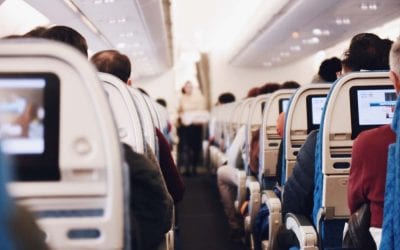
A senior citizen traveler should honestly consider their physical, mental, and medical conditions to avoid mistakes on their next journey.
 I’m a senior citizen traveler. I’ve been one for a while now. Yet I continue to travel for business and leisure. Many of the trips aren’t the easiest. I just finished a wonderful journey we took to Australia and New Zealand about 15 months ago. I took a transcontinental flight to Los Angeles. Then followed it by more than 15-and-a-half hours in the air to Sydney.
As a senior citizen traveler, I can travel virtually everywhere. But tit must be done differently than we did 20 or more years ago. The most important thing I’ve learned about my senior travel status is to neither overestimate nor underestimate my travel abilities. There is no doubt that, physically, I’m not the man I was in my 40s or 50s, but I can still get around, enjoy new destinations and cultures, and learn about them firsthand.
I have seven mistakes senior citizen travelers make that can prevent making their travel enjoyable, attainable, and meaningful.
1. Overestimated physical abilities:
It’s critical for seniors to be honest about their physical, mental and medical condition, particularly about any chronic medical conditions. Too often, many seniors think of themselves as younger and healthier than they are. I’ve laughed with many travelers about it, as they realize that describes them.
When you make your health/age self-assessment, recognize how far you can walk, hike, climb stairs or go up hills in a park or on a trail. Understand if uneven surfaces are a problem, as when seniors fall, too often disaster strikes with broken hips.
The honesty you use to evaluate must be absolute because your real condition will affect your enjoyment while on your journey and why go if you’re not going to enjoy your trip.
 2. Going without travel medical insurance for international travel:
Travelers of any age can get sick while traveling. Older travelers are generally at higher risk for more severe illness, complications and exacerbation of pre-existing conditions. No one can count on not needing medical help while traveling.
If you depend on Medicare while traveling domestically, you’ll have coverage. Medicare remains valid when you travel within the U.S. On the other hand, Medicare doesn’t cover seniors traveling internationally. If you have supplemental medical insurance, it may or may not cover you to any extent. You’ll need to determine what it covers and how much coverage it will provide. You should ask if your supplemental insurance provides international coverage. If it does, what are its limits, and are they continuous, annual, or lifetime? My supplemental international coverage has a lifetime limit.
I recommend that U.S. seniors traveling internationally purchase travel medical insurance. Be careful when purchasing it as the timing of your purchase matters. Many travel insurance policies require that you purchase it almost immediately after you make the first reservation for your journey or the insurance will substantially limit its coverage and likely won’t cover pre-existing conditions. I purchase my travel health insurance within a few hours of making my first reservation for any international trip.
3. Sticking to solo travel no matter what:
According to your health and physical capability, your destination, and the challenges of day-to-day itineraries, when you become a senior, it may be time to consider group travel. When you’re totally on your own, you don’t necessarily have any backup if something goes wrong. When you’re in a tour group, you have a guide and a tour organization that can provide essential assistance. To me, having a backup is essential and liberating. It allows me, as a senior, to visit places that would otherwise be too risky.
Alternatively, traveling with friends and hiring a guide for your small group can be a viable option. If you have the wherewithal, you might want to consider traveling with friends. It’s an option we’re using on an upcoming journey to Europe.
4. Overlooking the single supplement:
I’ve heard from many single seniors, widows, and widowers, who, when initially determining what a trip would cost in order to decide whether or not to reserve it, either weren’t aware of the dreaded single supplement or forgot how much cost it typically adds to a trip, particularly cruises where the supplement may be as much as 100 percent.
Be aware that while many companies in the travel industry charge significant single supplement fees, some tour companies offer no single supplements or supplements as low as 20 percent. You just have to seek them out and see if they make sense for you.
5. Loose trip planning:
Trip planning for seniors is more important than it was when you were younger. The choice of destinations can be critical. Destinations can have specific and difficult physical demands of terrain and climate. When choosing a destination, seniors, more than others, have to determine what they may need to do to adapt and ensure they are capable of that adaptation.
Another planning mistake that seniors make is tight flight connections. Tight connections are tough for anyone. I’ve had a few and had to literally run long stretches between terminals to make a connection. Today, as a senior, I would likely have missed each of those flights. Seniors have to take their physical abilities into account.
6. Thinking technology is just for younger travelers:
I’ve been hearing this from seniors for years, though these days less and less often. That’s a good change.
Cellphones are truly important communication devices when traveling. They are instantly available during emergencies. They give access to the Internet, email, data, reservations, boarding passes, and tickets. They can help with research on the go. With some effort, seniors can learn to use them, and today most of us already have them.
Tablets can be wonderful for seniors, particularly on long flights, when they can hold multiple great books without taking up the space and weight of the printed books we used to bring on vacations. To use cellphones internationally, all travelers need to make sure they’ve arranged an international cell plan to avoid being hit with a huge cellular bill when they return home.
7. Packing necessities without intentional choices:
Many seniors take a series of medications daily, along with others needed for specific illnesses or emergencies. Medications and other necessities must be packed in one’s personal item or carry-on, never in checked luggage, to prevent loss if the checked luggage is delayed, lost, or missing. Pack in them a full change of clothes, and a jacket or sweater, too.
I can’t speak for all seniors, just for myself. I find travel, leisure travel in particular, more rewarding than ever. The sights I’ve seen and the people I’ve met have made the extra difficulties seniors endure more than worth it. With thoughtful planning, many senior-based challenges can be mitigated. Keep traveling. That’s what I’m doing.
(Image: Long-haul flight landing at Dulles International Airport. Copyright © 2022 NSL Photography, All Rights Reserved.)
READ ALSO:
Should you buy quick travel insurance at checkout — or skip it?
Six years ago, 73 percent of sick plane passengers would fly — flight changes were too costly. And today?

After many years working in corporate America as a chemical engineer, executive and eventually CFO of a multinational manufacturer, Ned founded a tech consulting company and later restarted NSL Photography, his photography business. Before entering the corporate world, Ned worked as a Public Health Engineer for the Philadelphia Department of Public Health. As a well known corporate, travel and wildlife photographer, Ned travels the world writing about travel and photography, as well as running photography workshops, seminars and photowalks. Visit Ned’s Photography Blog and Galleries.