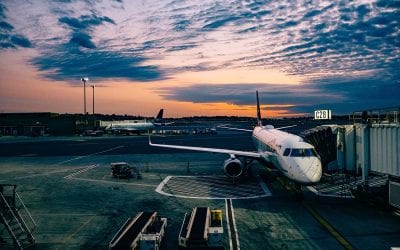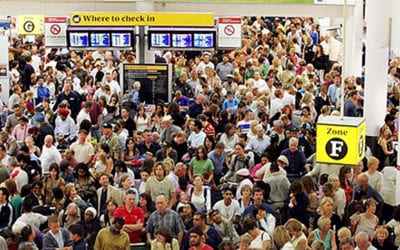
An airline changes the way it does business: Southwest Airlines adds reserved seating.
 This week, Southwest Airlines added reserved seats to its offerings. Back in May, they added to the glee of accountants’ luggage charges. Few passengers cried big crocodile tears over that change. But, in terms of passengers, the change for reserved seats has been received much more warmly.
This is a seismic shift in Southwest’s egalitarian ways, and it hits harder than a baggage fee. For more than 50 years, passengers had their choice of seats. Now, Southwest is like every other airline. The old ads used to say you could sit just like you do in church!
It appears to be a boost to Southwest’s revenue.
Yesterday, all seats were assigned. The lineups of passengers by the time of their check-in may be replaced by stanchions indicating boarding groups. What used to be the best seats, such as exit rows or seats in the front of the plane, will cost extra. Plus, there will be extra-legroom seats  available to members of Southwest’s frequent flyer program or holders of credit cards. Of course, passengers can pay full price.
According to The Hill, “Southwest first announced plans to ditch its longstanding open-seating policy in July 2024, in part to boost revenue. But the company also claimed its passengers increasingly preferred an assigned seating model with premium seating options.”
Critics argued that open seating was preferable for guests who booked in groups, or passengers who had to change flights last-minute (as they wouldn’t be immediately relegated to the least-preferable seats on the plane, as might have otherwise happened on a different airline). Some felt the switch to assigned seating was just a money-making tactic.
Of course, not all seats will cost extra. But for the best seats, you will pay extra unless you are very lucky. But for passengers with extra spending power, they can choose to spend more to sit in extra legroom seats to sit closer to the front of the plane.
Southwest’s assigned seating will work like this.
The Hill notes the following: “Customers booking flights with Southwest are now instructed to select from three seating options: “Standard” seats, located near the back of the cabin; “Preferred” seats, located nearer the front; and “Extra Legroom” seats, which are located near the exit rows and offer between 3 and 5 inches of extra legroom.”
The type of seat a passenger purchases determines when they board, or whether they’re eligible for other perks, Southwest’s website explains. The changes also mean slight tweaks to Southwest’s pre-boarding policies for active-duty military members or families with children.
Some people save seats for others. Others argue with each other to keep the middle seat. Yet others will sit with a seat between them, open. At the last minute, they give up the seat to a single passenger who scores a bonus of an aisle seat. I have used this trick many times, both for getting the aisle seat or to save the middle seat.
Sometimes I just sit in the middle seat.
Others try to beat the open seating game by taking their time. They harm other passengers with tighter connections. Leaving on time is key to Southwest’s entire operation.
Southwest Airlines claims that 80 percent of its passengers like assigned seats. I don’t believe them.
Perhaps it is 50/50. But can Southwest please provide me with access to this survey? The Southwest board of directors stopped the “bags fly free” program last May. Investor pressure forced this change. I suspect the same nefarious investor pressure led to the seat reservation issue.
I believe the Southwest 2006 survey that favored open seating. I really thought that open seating would continue.
The best part about assigned seating is knowing where you will sit on the plane before you board. Otherwise, the option is taking a chance. For me, I have only paid extra for a Southwest flight from Tampa to Phoenix. I bought an upgraded seat to get more space on the long flight.
The Southwest flights are not that long for me. I have no plans to pay extra for a flight, unless it is very long.
How do you feel about Southwest changing its seating policy?
- I am happy with it as I like being able to choose where I sit — 42%
- I will miss the old way as I liked the challenge to get to board early — 37%
- I like flying Southwest so I am going to wait and see — 21%
READ ALSO:
Absolutely no compensation for snow storm airline flight cancellations in U.S.
Travelers United works with aviation industry on sustainable aviation fuel

Charlie Leocha is the President of Travelers United. He has been working in Washington, DC, for the past 14 years with Congress, the Department of Transportation, and industry stakeholders on travel issues. He was the first consumer representative to the Advisory Committee for Aviation Consumer Protections appointed by the Secretary of Transportation from 2012 through 2018.