Veteran’s Day is a day to honor all the men and women who have served in America’s armed forces. To honor and learn about them, l recommend these US military sites.
 Veterans Day in the U.S. is tomorrow. It was designated as November 11th. World War I ended at the 11th hour of the 11th day of the 11th month of 1918. It was first called Armistice Day, but renamed Veterans Day at the urging of veterans’ organizations.
Veterans Day gives each American a special opportunity to visit US military sites. They travel to honor all the men and women of our armed forces who have served our nation to ensure our safety and freedom.
There are many travel opportunities in the U.S. to visit and learn about the rich fabric of our military’s history, some troubled, but most displaying our strength of character and fortitude.
Here’s my Veterans Day list of six historic US military sites that I recommend that every American visit at some time in their lives.
Arlington National Cemetery and the Tomb of the Unknowns — The Arlington National Cemetery, just across the Potomac River from Washington, DC, is the United States’ most famous military cemetery. It was established in 1864, during the American Civil War, on the grounds of Arlington House, the former estate of the family of Confederate General Robert E. Lee’s wife, Mary Anna (Custis) Lee, a step-great-granddaughter of George Washington. The cemetery is the final resting place of more than 14,000 veterans and military casualties.
There are many special memorials and graves of particular historic interest at Arlington. They include: the Rough Riders Memorial, the Nurses Memorial, the Battle of the Bulge Memorial, Chaplins Hill, the Space Shuttle Columbia and Challenger Memorials, and the grave of President John F. Kennedy.
The Tomb of the Unknowns, a monument dedicated to American service members who have died without their remains being identified, is located in Arlington. The Tomb Guards, elite soldiers from the 3rd U.S. Infantry Regiment, guard the Tomb 24/7. There is a moving “Changing of the Guard” ceremony conducted at the Tomb. Check the schedule before you go there.
The USS Arizona Memorial, the Tuskegee Airmen National Historic Site, and the Port Chicago Naval Magazine National Memorial are three important World War II memorials. They show the best and the most troubling history of our military in the 20th century.
USS Arizona Memorial — “Yesterday, December 7, 1941 — a date which will live in infamy…” President Franklin D. Roosevelt’s speech began when he asked Congress to declare war against the Empire of Japan. Japan’s surprise attack on the Navy’s base at Pearl Harbor, Hawaii, was made by 353 Imperial Japanese Naval aircraft. In the attack, more than 2,400 military personnel and civilians were killed, and many others were wounded. Four battleships were sunk and four others damaged. Sixteen other Navy ships were sunk or damaged. More than 300 military aircraft were destroyed or damaged.
The USS Arizona, sunk during the battle
The battleship serves as the final resting place for many of the battleship’s 1,177 crew members who lost their lives that day. Looking down at the Arizona from the Memorial floating above, the barbette of one of the gun turrets remains visible in the water. Oil can be seen rising from the Arizona’s wreckage to the surface of the water.
 When visiting the Memorial for the first time, I was awed, struck by the eerie quiet among the memorial’s visitors, even children.
Port Chicago Naval Magazine National Memorial — On July 17, 1944, a massive explosion jolted the San Francisco area, shattering windows and lighting up the night sky. At the Port Chicago Naval Magazine, 320 men were killed instantly, plus at least 390 injured. The cause was munitions that exploded, resulting in the worst home front disaster of World War II. Those deaths were not the only tragedy that took place at Port Chicago.
One month later, the unsafe munitions loading conditions prompted hundreds of servicemen to refuse to load them. Their refusal was called the “Port Chicago Mutiny.” More than 200 servicemen were convicted of various charges. Fifty, called the “Port Chicago 50,” were convicted of mutiny and sentenced to 15 years in prison and hard labor, plus dishonorably discharged. During and after the court-martial, serious questions were raised about the fairness and legality of the proceedings.
The truth was finally discovered.
Eventually, the truth of the Navy’s policies and actions that led to the explosion and the servicemens’ refusal to load munitions a month later were brought to light. We learned that only black sailors were assigned to load the dangerous munitions at Port Chicago. They weren’t properly trained. and safety procedures were often ignored. Furthermore, they were forced to load the munitions much too fast. Future Supreme Court Justice Thurgood Marshall, working as counsel for the NAACP, investigated base conditions and worked to appeal the guilty verdicts, highlighting the systemic racial inequality in the Navy.
It took 80 long years, but finally, in 2024, the Navy fully exonerated all the men convicted, including the “Port Chicago 50.”
Tuskegee Airmen National Historic Site
During World War II, the US Army Air Corps was racially segregated. African-Americans were subject to Jim Crow laws. The Tuskegee Airmen were the first African-American military aviators in the United States armed forces, yet despite their patriotism and desire to fight for their country they were subjected to racial discrimination both outside and inside the Army.
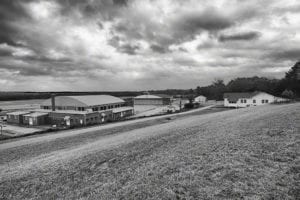
Basic pilot training took place at Moton Field, which looks much the same today as it did in 1942, when completed. It was built with private funds provided by the Rosenwald Fund. During World War II, the Tuskegee Airmen, the Red Tails, as they were called by the other pilots because of the red painted tails on their planes, were among the most decorated fliers in the Army Air Corps.
Valley Forge National Historic Park and Gettysburg National Military Park can teach us a great deal about our military history in America’s fight for independence and to rid the nation of slavery.
Valley Forge National Historical Park — During the American Revolutionary War, no battle was actually fought at Valley Forge. However, the Continental Army encampment was nonetheless instrumental in the American victory over the British. Valley Forge, just 25 miles from historic Philadelphia, was the site of the 1777-78 winter encampment. General George Washington led the Continental Army and he witnessed the sacrifice and perseverance of the men encamped during that brutal Philadelphia-area winter of alternating freezing and melting snow. The ice made it impossible to stay dry, bringing them honor during the extraordinary birth of the US.
Gettysburg National Military Park — The Battle of Gettysburg was a turning point of America’s Civil War. The Union victory at Gettysburg ended General Robert E. Lee’s second and most ambitious invasion of the North in 1863. The Battle of Gettysburg was the war’s bloodiest, with more than 50,000 combined casualties, including almost 8,000 killed.
The eerily named Cemetery Ridge, Pickett’s Charge, and Little Round Top, were all added to America’s lexicon at Gettysburg. Four months after the battle ended, President Abraham Lincoln dedicated the Soldiers’ National Cemetery with his historic Gettysburg Address.
When making a journey to these locations, we can begin to understand the dedication, honor, and service that those in the military have given the nation. The human cost of war includes the tragic losses of those in service and the sacrifice of their families.

READ ALSO:
Truth in advertising — the basis of competition
Know these four international air travel rights and save

After many years working in corporate America as a chemical engineer, executive and eventually CFO of a multinational manufacturer, Ned founded a tech consulting company and later restarted NSL Photography, his photography business. Before entering the corporate world, Ned worked as a Public Health Engineer for the Philadelphia Department of Public Health. As a well known corporate, travel and wildlife photographer, Ned travels the world writing about travel and photography, as well as running photography workshops, seminars and photowalks. Visit Ned’s Photography Blog and Galleries.