British Airways is permitting its passengers to make phone calls on planes while aloft. Experience has taught me that allowing voice and video phone calls on planes is a serious mistake.
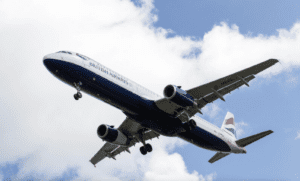 British Airways has begun to allow calls on planes equipped with Starlink WiFi. The airline is rolling out the high-speed in-flight Wi-Fi Internet access product over the next two years. The first planes to be equipped with Starlink are the jetliners in their long-haul fleet.
Passengers on those flights will have unlimited, free high-speed Wi-Fi. The Starlink system enables British Airways passengers to use iPhone Facetime, WhatsApp video, Microsoft Teams and Zoom, as well as other online voice and video communication.
Business travelers and social media influencers will love the ability to make voice and video phone calls while in-flight, but will anyone else?
I’m sure many business travelers will embrace the ability to hold meetings in the air. Social media influencers will be able to do live updates while aloft. They will love that.
 Because they’re permitting in-flight phone calls, I’ve scratched British Airways from my list of airlines I’m willing to fly.
For me, I’ve scratched British Airways from my list of potential airlines I’m willing to fly. I’ve done that despite the fact that they’re a Oneworld Alliance member. I primarily fly American Airlines, the largest Oneworld member and the dominant airline at my home airport where they have a hub.
The FAA has banned in-flight cellular phone calls for years.
For years in the U.S. we’ve been told by the Federal Aviation Administration (FAA) why airlines to date haven’t been permitted to allow cellphone calls on their flights. The FAA has explained that there were reports over many years that linked mobile phone use with potential aircraft navigation systems’ issues. It’s believed that mobile phones might cause safety problems for commercial airlines. Some pilots have said that mobile phone signals can interfere with pilot headsets, producing in them annoying buzzing effects. That problem can interfere with pilots understanding communications at critical times.
I can’t determine, at this time, whether or not the FAA and pilot explanations are based on actual incident data or continue to be speculation. Regardless, the FAA believes it isn’t worth chancing cellular calls in-flight at this time.
While the U.S. airlines are banning phone calls, using cellphones for other communication is permitted.
Through 2012, passengers were told to totally turn off their cellphones before takeoff. Passengers weren’t permitted to turn on their cellphones until well after landing. In 2013, passengers were allowed to use some cellphone function throughout their flights, but only if they were set to airplane mode.
Initially, airplane mode turned off all wireless communications, including cellular data and voice, Wi-Fi and Bluetooth, but passengers were permitted to re-engage Bluetooth only, so that their headsets and earbuds would work and their cellphones and tablets could be used for downloaded and installed entertainment. Eventually, manufacturers like Apple re-programmed airplane mode to turn off cellular use, but leave Bluetooth and Wi-Fi on, thus allowing passengers on commercial airliners to use their smartphones and tablets for entertainment, reading, and Internet for many uses, including text messaging, email, website use and app use that depended on the Internet for data. For many airlines, providing Wi-Fi use with smartphones, tablets and laptop computers became a profit center.
While the FAA has prohibited cellular communication via smartphones on airplanes, they haven’t explicitly banned the use of cellphones to make phone calls via the plane’s Wi-Fi.
The FAA’s prohibition on mobile phones is to stop their cellular use. Today’s smartphones don’t need a cellular connection to make phone calls. Smartphones like Apple’s iPhone can make both standard phone calls and Facetime video calls via the Internet. Fortunately, as far as I’m personally concerned, it’s U.S. airlines today that are preventing phone calls in commercial jetliners. American Airlines, for example, states on their Wi-Fi and connectivity page at their website,
“You can use your cell phone, laptop and other electronic devices onboard until advised by the flight crew, but phone calls aren’t allowed during flight.”
For years, Delta Air Lines has also prohibited in-flight phone calls. Likewise, United Airlines allows text messaging and many other uses of their Starlink Wi-Fi, but is clear about not supporting voice and video calls in-flight. Southwest Airlines and JetBlue Airways also don’t permit voice or video calls in-flight.
I’m thankful that U.S. airlines continue to prohibit voice and video calls while in-flight. This is why.
I’m a regular on Amtrak. I believe cellphone use on Amtrak trains provides more than enough evidence of what would happen if phone calls become permitted on U.S. commercial aircraft.
If you ride on Amtrak, you’ll suffer annoying rides due to constant phone calls on the trains. The train rides are full of publicly made “private” phone calls, some voice-only and many video phone calls. Amtrak passengers regularly use their cellphones for long conversations, speaking at volumes noticeably louder than for normal speaking. Even if I wear my noise canceling headset to listen to background music, watch a video or listen to an audio book, I can still often hear cellphone conversations surrounding me when I ride Amtrak.
Amtrak has “quiet cars,” but unfortunately, that concept won’t work for the airlines.
Thank goodness for Amtrak’s “quiet cars,” where cellphone conversations are forbidden. In fact, all conversations are forbidden in Amtrak’s quiet cars. I note that Amtrak’s quiet cars are extremely popular. The quiet car is always the first to fill up during boarding. When I take Amtrak I generally arrive at the station far enough in advance that I can get a seat in the quiet car.
I can’t imagine having multiple air travelers using cell phones, joining noisy children, loud passengers, and obnoxious drunks with whom air travelers already have to deal with in the narrow inescapable tube they call a commercial aircraft cabin. About a year ago I flew from Los Angeles to Sydney, Australia. Can you imaging the cacophony of 15-and-a-half hours of phone calls, particularly when you’re trying to sleep on a flight? I can’t!
As a compromise, cellphone voice-call advocates have suggested that airlines could have “cellphone” and “quiet” sections on planes. That sounds like the old days when we had “smoking” and “non-smoking” sections. These never worked. The smoke fills the entire plane with disgusting cigarette smoke from the “smoking” section. The noise of cellphone conversations will also fill the plane. It’s an unworkable plan.
With high speed Internet communication available on planes, passengers don’t need to make voice calls to communicate with the outside world.
While aloft, air travelers, if they desire, aren’t exactly “off the grid” these days. They can communicate via a variety of “silent” means. This includes text, chat, social media messaging, and email. When I fly, I’m typically connected to the Internet for the duration of the flight with my laptop. As a consultant, journalist, and photographer, I don’t want to fall behind in work, even when on vacation. Yet, I haven’t ever felt that I had to make a phone call while in the air. Frankly, with silent communications options available to air travelers, we don’t need annoying voice calls added to the mix.

READ ALSO:
Mom’s important travel lessons I will never forget
Benefits of using a hop-on-hop-off bus or a tour bus on vacation

After many years working in corporate America as a chemical engineer, executive and eventually CFO of a multinational manufacturer, Ned founded a tech consulting company and later restarted NSL Photography, his photography business. Before entering the corporate world, Ned worked as a Public Health Engineer for the Philadelphia Department of Public Health. As a well known corporate, travel and wildlife photographer, Ned travels the world writing about travel and photography, as well as running photography workshops, seminars and photowalks. Visit Ned’s Photography Blog and Galleries.