I have 10 hacks to prevent TSA security hassles and individualized inspections, inadvertent test-positive results for explosives, theft, and being slowed or detained.
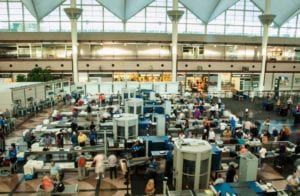 A theft at TSA Security (Transportation Security Administration) at the Fort Lauderdale airport has come to light. A disabled male passenger with a prosthetic leg placed his bag, cellphone and black wallet into a TSA bin to be screened by x-ray at the TSA airport security checkpoint. When he got through the security line to pick-up his belongings, his wallet was missing.
He immediately reported the theft to TSA. TSA immediately reviewed their video footage and soon identified the thief. It was a passenger. Before the passenger left on his flight, airport law enforcement tracked him down. They found the stolen wallet in his carry-on. The man claimed he accidentally grabbed the wrong wallet. The problem was that he had both wallets, his brown wallet and the other passenger’s black Gucci wallet.
Like many disabled passengers, the man took extra time to get through TSA security. The accused passenger was booked in Broward County, Florida, charged with petit theft, possession, plus receiving and retaining a stolen credit card/debit card.
Here’s my list of top hacks to get through TSA without a hassle:
Stow a tracking device in your luggage:
Last year, U.S. airlines mishandled approximately 2.4 million bags according to the U.S. Department of Transportation. I recommend Apple AirTags for your checked and carry-on luggage. Electronic tracking devices can rescue air travelers by locating their luggage virtually anywhere in the world. Twice last year, AirTags in my checked luggage helped me locate my bags at the airport when they came up on a different carousel than announced.
If your carry-on luggage is gate checked, mishandled and lost, AirTags in them can help successfully track your bags. They can also help police find your bags, if stolen.
Accidentally or purposely packing prohibited items can slow you down so much during the TSA inspection process.
Not checking for prohibited items:
I see someone getting a hand inspection of their carry-ons almost every time I fly. Typically, it’s because the carry-on x-ray unit highlighted a prohibited item(s) in a passenger’s bag. Whether the air traveler packed the item out of ignorance, purposely hoping it wouldn’t be detected, or forgot it was there doesn’t matter. It triggers time-consuming hand inspections that sometimes cause passengers to miss their flights.
Last year, TSA found 6,678 firearms in carry-ons at TSA airport security checkpoints. Generally, air travelers say that they had no idea it was in their bag. Of course, those firearms didn’t magically get packed in their bags.
Before you leave on your flight, go to TSA’s What can I bring? page. On it, you can search for anything you’re not sure that you’re allowed to pack in your carry-on. If an item isn’t listed, you can ask TSA directly on Facebook or “X” at “AskTSA.” When packing, always start with an empty bag to ensure nothing was already in your bag. Then don’t pack any prohibited items.
Sloppy cable and wire packing:
Most travelers use a variety of electronic devices while on the go. I travel with an iPhone, wear an Apple Watch and hearing aids and pack an iPad, a laptop computer and a camera. As a result, I pack chargers, cables and wires to charge and use the devices.
In my experience, loose or randomly packed cables and wires in your carry-on will often cause you to be pulled aside for a hand inspection. A number of TSA TSOs and supervisors have told me that when they view collections of tangled cables and wires during their x-ray scans they tend to become suspicious. They also said that disorganized cables and wires makes it hard to decypher what’s under or above them.
Cables and wires should be carefully wound and packed in an organized way. I recommend winding all cables and wires then keeping them bundled with an elastic cable tie. Put them in a pouch or two to keep them together and well organized. That way they shouldn’t look suspicious. It also makes it possible to tell what’s under and over them.
If your hair conditioners, liquid body washes and lotions contain glycerine, if checked by TSA you will likely test as if you’ve handled explosives. If flying, stay away from them, including using them at home within 24 hours of flying.
Hair conditioners, liquid body washes and lotions:
Glycerine, an often used ingredient in many personal care products, has been well documented to cause air travelers to test positive for explosives when TSA uses their explosive trace test. I recommend that you don’t travel with personal care products containing glycerine and never use them within 24 hours of your flights.
Misunderstanding the 3–1–1 liquids rule.
In carry-ons, the TSA liquids rule requires each passenger to limit their liquids, gels and aerosols to 3.4 ounces per container. All such containers must fit in and be placed in a single quart-sized resealable bag. Regardless of how much liquid is in a container, no liquids’ container may exceed a 3.4 ounce capacity. Larger containers are permitted in checked luggage. There are exceptions to the rule for medically necessary liquids.
Pack your bags with intent to allow TSA to easily see the contents of your bags so you can speed through TSA security checkpoints.
Packing poorly.
>Carry-ons, like checked luggage should be packed in layers so that TSA TSOs can scan your belongings to determine that you have no prohibited items in your bags. If you pack too densely, so that they can’t identify what you have, it will trigger a time consuming hand inspection. I recommend packing cubes to help you organize your belongings.
Large electronic devices.
>If you don’t have TSA PreCheck, be sure that the items you need to pull out of your bag, such as large electronic devices and your liquids baggie, are easily accessible. This will make it easy to slip the items out quickly when you get to TSA security and then quickly repack them after inspection.
Packing personal electronics badly.
>Unless you’re in the Precheck line, you must remove portable electronic devices larger than a cell phone from your carry-ons and place them in a bin with nothing on top or below them.
Not having your travel documents ready and handy.
>When you get to the top of the line at TSA airport security be prepared to quickly show your documents to the TSA TSO. If you don’t, it could cause you to be delayed. Keep your documents handy, including a government-issued photo ID, boarding pass and if traveling internationally, your passport. Boarding passes are usually on your smartphone. Have it ready to go, fully charged, with the boarding pass easy to retrieve.
Don’t put your valuables loose in a TSA bin, including keys, cellphones and wallets. Put them in a zippered jacket pocket or in a closed pocket in your carry-on or personal item.
Secure personal items in the TSA security bin:
It’s also important to have a way to secure your personal items like your smartphone, keys, coins, etc., when required to put it in a bin while you walk through the metal detector or full-body scanner at the checkpoint. You don’t want to end up like the disabled passenger in my example above. Wear a jacket with at least one zippered pocket or stow them in a zipper-sealed pocket in your carry-on. Then place it in a bin. Don’t put your photo ID or passport in a bin. Keep it on you.
These 10 hacks will help you get through TSA security checkpoints more quickly and safely.
READ ALSO:
Why baggage and mobility device handling reporting rules are important to passengers
Summer road trip questions you never ask

After many years working in corporate America as a chemical engineer, executive and eventually CFO of a multinational manufacturer, Ned founded a tech consulting company and later restarted NSL Photography, his photography business. Before entering the corporate world, Ned worked as a Public Health Engineer for the Philadelphia Department of Public Health. As a well known corporate, travel and wildlife photographer, Ned travels the world writing about travel and photography, as well as running photography workshops, seminars and photowalks. Visit Ned’s Photography Blog and Galleries.