
We’ve all heard horror stories from travelers about their delayed, lost, stolen, missing or damaged checked luggage. Maybe you have your own horror story
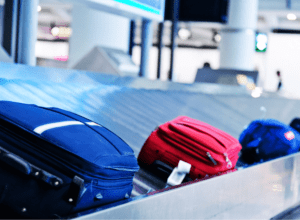 Unfortunately, too many travelers exacerbate their checked luggage loss by packing laptops, family jewelry, cash, prescription medications, breakables, and valuables in them. When they seek compensation from their airline, they’re told: “Sorry, those items aren’t covered.”
When packing my checked and carry-on luggage for air travel, I keep in mind six main issues:
- air travel security agency regulations
- airline regulations
- checked baggage handling
- the value of my belongings for touring or work
- an item’s actual and intrinsic values
- whether or not an item is essential for my health or safety.
If you’re packing items of high actual or intrinsic value, which you can’t afford to lose or become damaged, leave them at home; but if you must take them, pack them in your carry-on.
Domestic rules are governed by contracts of carriage.
 TSA regulations and those of other countries’ air security agencies govern what you can take in your checked and carry-on luggage. These agencies have “Liquid Rules,” and “Prohibited Items Rules,” which must be obeyed by air travelers. For example, while you might prefer to pack spare lithium batteries for electronic gear in your checked luggage, TSA requires them to be packed in your carry-on.
The airlines influence your packing decisions by specifying in their “contracts of carriage” they have no liability whatsoever for specific damaged, missing, stolen or delayed belongings. If you pack cash, electronic gear, jewelry, prescription medication, computers, musical instruments, valuables, and breakables, etc., in your checked luggage, which becomes damaged, lost, stolen, or delayed, count on the airlines saying, “Sorry, we have no liability for those items.” [However, these items are included in international compensation.]
- Moreover, on US domestic flights, for example, the airlines have a total limit of liability, per passenger, per flight, of $3,500, and on international flights of about $1,600. So, for example, even if the airlines accepted liability for jewelry, and you packed valuable jewelry in your checked luggage, you could only collect $3,500 at most, for the total loss — the jewelry, all your other belongings in the checked luggage, plus the luggage itself.
 Don’t pack valuables, cash, breakables, electronics, laptop computers, tablets, prescription medications, etc. in your checked luggage.
While all checked luggage is screened electronically, some checked bags are also examined by hand. Unfortunately, there have been reports of TSA and airline employees stealing from checked luggage, so keep valuable belongings in your carry-on.- The way luggage is handled by airport machinery and luggage handlers, the odds are significant that fragile items will be damaged. In addition, bottles of soda can explode in checked luggage, and even bubble-wrapped drink containers can break open. Don’t pack breakable items in your checked luggage.
- My camera equipment, essential for my work, must arrive at my destination with me, in good working order. For hikers traveling to national parks, hard-to-get topographical maps are essential. A special gift for an important birthday could be impossible to replace. If you’ve got to arrive with particular items essential to your journey or difficult to replace, they shouldn’t be packed in your checked luggage.
- If you have to take valuables such as a work of art or a keepsake with a high actual or intrinsic value, don’t pack them in your checked luggage when you travel.
- Don’t pack all your clothes in your checked luggage. Keep at least one complete change of clothes in your carry-on. With a total change of clothes, you can get along for a couple of days, awaiting the delivery of your delayed luggage. A change of clothes can also come in handy in case of an accident on the plane. On two occasions, when a flight attendant was accidentally pushed from behind, a cup of soda spilled in my lap. I was thrilled to have a change of clothes in my carry-on.
Don’t pack prescription medications and travel documents in checked luggage.
- Many travelers take prescription medications daily. Don’t pack your medications in your checked luggage in case the luggage is lost, stolen or delayed. If traveling domestically, it takes time to have new prescriptions written and filled; when traveling internationally, it’s harder to replace prescription medication.
- Warning: Especially if a medication is “restricted,” pack it in its original container with the full prescription label on it, so that government officials won’t question whether or not the drug is illegal.
- Don’t pack your travel documents in your checked luggage. Fortunately, today, a few travel documents need to be printed. If you have paper documents you can’t
 afford to lose, keep them on your person or carry-on. For electronic documents, keep them in your smartphone, tablet, and a copy available via the Internet in “cloud storage” such as Google Drive, Dropbox, or Sugarsync.

After many years working in corporate America as a chemical engineer, executive and eventually CFO of a multinational manufacturer, Ned founded a tech consulting company and later restarted NSL Photography, his photography business. Before entering the corporate world, Ned worked as a Public Health Engineer for the Philadelphia Department of Public Health. As a well known corporate, travel and wildlife photographer, Ned travels the world writing about travel and photography, as well as running photography workshops, seminars and photowalks. Visit Ned’s Photography Blog and Galleries.


I’m going to costa rica in july, can I pack deet in my luggage?
Yes
I’m flying to Cabo San Lucus and need to check a Water pump for my boat it’s a small 13 pound brand new. Never been pressurized pump. With full documentation
Will it be taken by TSA its value is 500.00.
Thank you so much
Captain Matk
Mark, while there is no prohibition of a water pump from being packed in your checked luggage, at $500 in value if, lost, damaged or stolen your airline will consider it a valuable and as such will not accept liability for it. When they see something like the pump in your checked luggage when x-raying it, they will undoubted open your bag. I prefer to avoid that if at all possible, myself. Have you considered using FedEx or UPS to ship it to where your boat is kept in the Cabo area? I would, in fact, ship it, insured, if it was me, as long as there was someone there to accept it and hold it safely until I arrived.
As a photographer, I’ve shipped photo gear many times to my hotel, where they hold it for my arrive in their offices in a locked area.
Good luck no matter what you decide.
Ned
I’m going too Fiji do I need a Drs letter to carry my epipen
Doctor’s letters for prescription medications are not what you would want to carry. If you bring documentation for your prescription medications it should be in the form of a signed prescription. I assume you’ve take the EPIPEN out of its box, so while you’re better off having a prescription for it as documentation, since it’s an EPIPEN you shouldn’t need it for Fiji. If you’re taking any medications which contain a barbiturate, that’s a horse of another color. At the least, that kind of medication must be in the original container and if possible you should be carrying a signed prescription for it.
One thing to watch out for with the EPIPEN is that it’s a liquid that’s not going to fit in your liquids baggie to carry it with you in your carry-ons. As a necessary medication it’s exempt from the liquids rules and you don’t have to carry it in the standard liquids baggie, but you do have to inform the security you have it and it does have to be separately screened. I put mine in a large plastic bag in which it easily fits to make it easy to carry it, declare and show it to the TSA or other country’s security officer at the airport who typically directs me to put it in a bin. I’ve had no trouble taking it that way.
Great thank you. I have a pen still in the box so I’ll take that one with me
Viv
You’re welcome. Have a great journey.
I’m going to France for an operation on my spine so am on some pretty strong painkillers. I also have Rheumatoid Arthritis as well as Fibromyalgia so you can imagine my list of medications is quite long plus we will be gone for four months, if everything goes well.
My question is do I need to carry on to the plane all my medication or can I check some of it. I have a letter from my GP listing all medications, should I tell them about it when I check in and offer the letters without being asked.
Hi Debbie,
Here’s your problem. Your medication is likely costly, and sounds like it’s absolutely essential. Therefore, I would ask what would happen if you packed some of your medication in your luggage and it was lost? I suspect you’d have a tough time because it’s prescribed by a non-French physician, and it’s possible that the precise drugs you want aren’t available in France and you’d have to get a substitute. You letter gives you no access to your drugs whatsoever even though it’s signed by a doctor. Only prescription forms count and even then to get them filled in France you’ll need them countersigned and hope that France has your specific prescriptions available.
Finally, as a word of warning to all, the airlines will take no responsibility or liability for valuables and that includes expensive drugs, if lost, stolen or damaged, no at all.
So, my advice continues to be that all prescription medication you’re taking with you internationally or domestically should be in their original container and packed in your carry-on. It’s the only safe way to ensure you’ll have it when you land and won’t have to worry about putting in claims to your personal insurance. It’s also the only way you can be sure you’ll have the precise medication you’ve been using as many countries, especially with regard to pain-killers have very different drugs available, and very different laws on their access, etc. There’s no guarantee you’ll be able to get them in a foreign country.
Hi, just a quick question..
Is it okay to pack a music box in my checked luggage?
Second question.. can I bring a snow globe in my carry on bag? Thanks for the help.
Thanks for your readership Ashley.
You should have no problem packing a music box in your checked luggage, except that I would advise against it, even if you bubble wrap it, if it has any real value. The airlines take no responsibility for valuables and breakables packed in your luggage, so if it doesn’t survive, they won’t pay your claim. Fragile items are better off packed in you carry-on where you control how your bag is treated.
Regardless of where it’s packed, assuming it’s a present, don’t gift wrap it. If TSA wants to look in it, they will tear up the gift wrap and discard it. Bring the gift wrap with you and wrap it at your destination. IF it’s to go in your checked luggage because it’s too big for your carrying, wrap it in bubble wrap and put it in a strong cardboard box to protect it.
You can bring a snow globe in your carry-on, but only if it contains no more than 3.4 ounces of liquid in it (a little smaller than a tennis ball) and it fits in your one quart-sized resealable plastic bag with your other liquid/gel items such as shampoo, toothpaste, etc. If it won’t bit because of its base, for example, you’ve got to pack it in your checked luggage. If you have to pack it there, you should not only use bubble wrap and a strong cardboard box to stow it, but also put it in a waterproof bag in case it breaks in your bag, so it won’t ruin your belongings or bag.
There’s another option to consider. Box them and ship them UPS to your destination. If you’re going to a hotel, for example, many hotels will allow you to ship the box to them a few days in advance of arrival and they’ll hold it for you.
Good luck. Safe journey.
Thank you very much for your fast response. I will definitely use the information you provided for me.
You’re very welcome. It was my pleasure to help.
Hi Helen,
Both ibuprofen and Alka Seltzer are solids and can be packed in either your carry-on or checked luggage. These are generic medications and they, or their substitutes are generally easy to purchase in most major cities and resorts. I recommend that medications of all kinds are in one’s carry-on, definitely prescription medications, and hard to get over-the-counter meds, to ensure you have them, even if your checked bag is lost or delayed. In this case, it’s not that important due to the particular drugs you’re talking about. Remember, in some locations the names are very different and you’ll have to be sure about what you purchase.
Have a great time.
My sister is diabetic and takes gabapentin for nerve pain in her feet. She left a large amount when she visited (150 pills) in a zip loc bag, obviously with no original bottle. I’m flying to Baltimore and am bringing the pills. Carry on is not an option (long story). I don’t want to check a random big bag of pills so I put them in a daily organizer case. Can I put them in my checked suitcase and be ok?
Thanks for your readership.
Fortunately, as far as I can tell, gabapentin is not considered a narcotic. Gabapentin is an anti-epileptic medication, also called an anticonvulsant. It affects chemicals and nerves in the body that are involved in the cause of seizures and some types of pain.
Had gabapentin been a narcotic I would have strongly advised you ship it to your sister via UPS or Fedex, rather than fly it to her yourself and have to take it past TSA. (Don’t forget TSA x-rays all checked luggage, not just carry-on luggage and other belongings.)
It can always be a problem traveling with a large quantity of unlabeled medication, especially if prescription medication and especially if traveling internationally. While you haven’t said so overtly, it appears as though you’re flying domestically in the US to Baltimore, MD.
Whether you pack the pills in carry-on, or in your checked luggage from a “You’re flying with someone else’s unknown prescription medication” standpoint, you just never know, but most likely the pills will never be detected and you’ll have no problem flying them to Baltimore.
That said, be prepared to answer questions about them if found, if at all possible. Have your sister take a photo of her prescription bottle label and email it to you with a description of what happened and what you’re doing. I’m betting that if push comes to shove, if questioned by TSA, or police authorities, if police are called in, the explanation will suffice, especially since the medication isn’t a narcotic, nor listed as an illegal drug.
In the future, however, suggest to your sister that whenever she travels, all prescription medication she brings with her should be in its original container for identification purposes to show what the drug is and that it’s her prescription. This is absolutely essential when traveling internationally, as what’s legal here, isn’t necessarily legal in another country, but they normally let it pass if you have a prescription from your home country and can prove it via the original container. If it’s considered a narcotic though, you have to be very careful and should research the drug to see if its a problem at your destination(s).
The reason I always suggest packing medication, especially prescription medication, in your carry-on is simply because that way you’ll be sure when you arrive you have your medication with you, even if your checked-luggage is lost, delayed or stolen.
Have a safe and smooth flight.
Is TSA pre- check worth the money? I travel with a prosthetic leg and a wheelchair when long walks are inevitable. What advice do you have for me and my condition.
Hi David,
Your question is an important one for many people traveling by air.
To start, the lines are generally much shorter at TSA Pre and that’s a big plus because you can move through the line more quickly. In the Pre line you don’t need to remove your shoes, a laptop, your liquids baggie, your belt, and light-weight jacket. That makes it easier for anyone to get through the line. TSA Pre costs $85 for a five year term, which is just $17/year. If you fly just once per year or less often, it may not be worth it for the average person, but if you fly more often, to me it’s worth it. Moreover, for someone with a physical disability or important health issues I think it’s most definitely worth it because it makes travel easier at the airport.
The Amputee Coalition has some very helpful information for you.
First, if you want, you can contact TSA’s help line, TSA Cares. It’s specifically there to assist travelers with medical conditions. They can help you at the airport, but you have to call at least 72 hours in advance to get help from them. If necessary, TSA will refer you to a passenger support specialist, who has specific training in helping individuals with special needs. You can even have them request a passenger support specialist in advance to help you at the security checkpoint. You can reach the TSA Cares line at 855/787-2227 Monday through Friday from 8am-11pm Eastern Standard Time, and on weekends and holidays from 9am-8pm Eastern Standard Time.
When you get to the checkpoint, you’ll have to tell TSA about your disability and your prosthetic leg. You can use the TSA Notification Card to explain your condition, but it’s really not necessary as the TSA agents will listen to you.
This is how the Amputee Coalition describes what’s going to happen,
“Regardless of the method in which your screening takes place, your prosthesis will need to have additional screening. The TSA agent will need to see and touch your prosthesis but will not ask nor require you to remove it. This may require you to lift part of your clothing, without exposing sensitive areas. Sampling areas can be accessed by lifting your pant leg or shirtsleeve or by raising your skirt to knee-level. The TSA officer will explain the explosive trace sampling procedure so that you are aware of the process. At any time during the security screening, you have the option of requesting a disposable paper drape for privacy.
A TSA officer should offer you a private screening if your clothing will need to be lifted or raised in order to obtain the explosive trace sample. You will not be required to remove any clothing during the process or remove or display the belt that holds your prosthesis to your body. The agent will test the prosthesis for traces of explosive material. If explosive material is detected, you will need to complete additional screenings. If you voluntarily remove your prosthesis, it will be screened by X-ray.
If you opt for a private screening, you may have a companion, assistant or family member accompany and assist you in the private screening area once they have been screened themselves. You have the right to refuse a private screening if it is offered to you; however, regardless of in private or public, you will need to complete a security screening in order to proceed beyond the security checkpoint.
If you feel you need to travel with a wheelchair or scooter, there are several things that are important to know in advance. If you need a wheelchair once you reach the airport, your airline should provide accommodations to ensure your ability to navigate the airport. The airline may provide you with a wheelchair and a wheelchair attendant while you are in the airport. This is not a service that is provided through TSA, so you will need to communicate your needs with your airline before traveling.
If you are traveling in a wheelchair, the process for safety screening is determined by your ability to stand and walk. It is possible to complete the security screening without standing up or walking but it is important that you communicate your abilities to your TSA agent before the screening process begins.”
You need to know the procedure and your rights. That said, I do think TSA Pre would be helpful for you.
My husband has a feed tube and will need to take liquid food, large syringes to pour/ funnel the food into his tube.
We have heard that this qualifies for medical supplies and the airline should not charge for the bag.
How should this suitcase be marked or labeled?
Hi,
Most airlines will allow passengers, even ones in economy, to take essential medical equipment and supplies as carry-on without additional fees, however, this is not guaranteed. You need to identify this bag at check-in and at the gate to the gate agent.
You bag will first have to go through TSA Security. Especially because the bag will contain liquids, you must identify the bag to TSA at the checkpoint and explain what’s in it and why. Be prepared to have it thoroughly scrutinized by TSA and they may even open a container or two, or every container to ensure they are not liquid explosives. Your notification to TSA must occur at the very beginning of the security process. If you notify them later, the liquids will likely be confiscated and it’s possible you’ll both be denied boarding. TSA doesn’t have much flexibility about this notification.
At the gate, it’s essential to notify the gate agent of the bag of medically necessary gear, medication and food. The gate agent, along with the pilot of your aircraft have the final authority to allow or refuse the bag. They can make it easier for you to board too. You always want to stay on their good side.
As to labeling the bag, there is nothing specific which is needed.
I just saw you said suitcase. Do you mean to check this bag? If so, the airlines have no program to allow that. Medically necessary gear, medicine, etc. is expected to be a carry-on item and as such must generally conform to carry-on dimensional rules.
Good luck.
Is there a limit to how much cash can be carried on international flights? I probably won’t carry more than a thousand, much more likely to only bring $500.
Hi Tookie,
I can’t answer that question definitively because I don’t know what your origin country is, nor to where you’re traveling. Different countries have different limits for bringing in cash, and taking it out. Some limits vary between foreign and local currency in their restrictions. In addition, some countries limit cash payments and require payment by traceable methods above that limit.
Off the top of my head, however, I can’t think of a country which limits taking cash in or out to less than the equivalent of $1,000.
With interconnected ATM networks generally available throughout the world, unless I’m traveling to remote locations I would never consider carrying more than $500 in local and/or US Dollars, my home currency, and frankly I normally carry less. Personally, I try to limit cash transactions as much as possible when traveling for the same reason I limit it at home. The power of the credit card is immense in handling unsatisfactory purchases, and it’s safer not carrying significant amounts of cash. When I need cash, I can go to an ATM around the clock, or into a bank during it’s normal hours.
Look for credit cards which don’t charge a fee for foreign currency transactions and which historically use competitive exchange rates to use when traveling out of your home country.
I always carry some local currency for gratuities and specific circumstances as needed and for emergencies, but I typically keep that down to no more than $200 at any time. Is there a specific reason you want to initially carry $500-$1,000 on your upcoming trip.
Thanks for your readership.
Hi Lesster,
This is actually a complex question because it involves the laws of two countries.
Typically, the U.S. doesn’t restrict the electronic devices a U.S. citizen or resident can take with them while traveling outside the country, as long as it’s for their personal use. Clearly the tablets and phones you plan to take with you to El Salvador aren’t for your personal use. That’s where it gets complicated.
The U.S. has restrictions, to the best of my knowledge, on taking electronic devices to some countries, but a quick search didn’t find El Salvador on that list, however, I could have missed finding the absolute current information on El Salvador. To be sure you can contact U.S. Customs and Border Protection, and possibly the U.S. State Department who will be able to answer that question.
At the other end, El Salvador may restrict you from bringing in these items which aren’t for your personal use (Don’t claim they are anything but presents for your family or you could really get into trouble.), not for political reasons, but for tax reasons. Like many countries, they may want to charge you duty and other tax for importing them into the country. This is actually quite typical of many countries who feel you should have purchased them in their country so the appropriate duties and taxes would have been paid prior to you buying them.
I don’t know if El Salvador will charge duty or not, but be prepared for that possibility. Have your receipts with you to prove their cost so that in the event of problems you can prove ownership and value. You can check with the El Salvador embassy to find out their rules on you bringing in these gifts.
Good luck with your trip and bringing those wonderful presents to your family in El Salvador. Thanks for your readership.
Thank you so much for that quick response , I appriciate you taking your valuable time to help other with their concern, thank you again and you do a great wonderful work .
You’re very welcome.
We are travelling from US to India and we want to check in a desktop and some monitors. As they dont fit in the carryon size. Do we need to declare to the airlines agent while we check in about these electronics? Do we need ask for Limited release document. Will our declaration have any impact on TSA check. What will be the best way to deal with this situation? All our checked in luggage are under correct size and weight restrictions.
Hi Kody,
There are some issues of which you should be aware before taking the computer equipment to India from the US.
First, normally the airlines don’t accept liability for valuables or breakables. Therefore if you want the computer gear insured in case of damage, theft or loss, you’ll have to purchase the insurance from the airlines. It’s not cheap, but you can get the coverage, but the airlines won’t sell it to you if the items aren’t well packaged/protected. You also have a limit on the number of bags/cartons you can bring as checked luggage. You’ll need to check with your airline about the insurance and if, according to how you’re bringing the computer gear with you they will allow it. Remember that excess baggage costs big bucks to bring with you on international flights. If you’re switching between airlines to get there, that could add another problem to the mix.
As to limited release, meaning the airlines accept no liability whatsoever to carry the gear, do you really want to go that way? I wouldn’t.
Next there is the problem once you get to India. India has very strict rules on importing items such as computers and other computer gear. You will likely have to pay an import duty on the gear and therefore you better have a bill of sale or they could hit you with a bigger duty bill than it deserves if they charge it on a retail price in India and you got it for a great price here.
Frankly, I continue to hold to the same advice I’ve offered others who are bringing presents to friends or family outside the country. If it’s not special or somehow unique or unavailable where you’re going, buy it abroad at the destination country. Otherwise, seriously consider shipping it which may end up saving lots of cash.
Good luck and thanks for your readership.