DOT is the judge and jury when it comes to airline transgressions. DOT should enforce passenger protections.
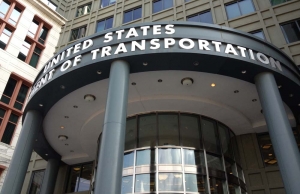 The Department of Transportation (DOT) seems to have lost its way regarding passenger protections. It doesn’t seem interested in caring for its actual customers, America’s consumers, and airline passengers. The needs of the public seem to be being ignored, and the needs of airlines are getting higher billing than those of passengers.
The malaise of DOT can be seen in its lackadaisical enforcement of traveler protections and its half-hearted efforts at getting rules written to put new laws passed years ago into effect.
One can’t blame many passenger protection faults on the Trump administration. During their last four years, the Biden administration seemed to have no urgency regarding consumer protections. The Trump administration was chaotic and saddled with an almost empty cadre of transportation upper-level civil servants. The Biden administration ignored travelers. All administrations took care of keeping the airlines surviving through the pandemic. In the meantime, consumers and airline passengers are bearing the brunt of this lack of action by the three last administrations.
The following issues are finally getting the attention they deserve through executive actions at the Department of Transportation (DOT). This is mainly because of the tragedy at Reagan National Airport (DCA), most likely caused by too many helicopters in DC and not enough air traffic controllers.
1. No rules for families sitting together
The previous version of the FAA bill had several important consumer protection provisions passed as law by Congress. One was called the “Families Sitting Together Act.” The law was passed to allow families with children 13 years of age and younger to sit with their parents without an extra charge for a seat reservation.
This law makes sense. Who wants to have their toddler separated from them on a flight? And who wants someone else’s toddler sitting next to them weeping and wailing? Flying with your minor children is one of the basic traveler protections. DOT is now opening a new legislation push for enforcing that law. It would be far better for the DOT to write rules for the law already passed.
Instead, President Trump’s administration is ignoring the law.
2. No rules for refunds of checked baggage fees when bags are delayed
Another law passed by Congress would refund the checked baggage fee if the checked bag did not get into the hands of the passenger within a reasonable time after the flight. It seems not too much to ask to have the service for which one pays to be provided. The airlines protested vigorously; however, even Congressmen could see the benefits of guaranteeing a modicum of checked-baggage service — getting the luggage to the passenger after the flight for which the passenger was charged a checked baggage fee.
Alas, this law is not in effect yet. Airlines have no requirement to provide the service for which airline passengers are now paying. It is shameful.
3. FAA refuses to clarify safety evacuation tests
One of the most lively discussions was about the health and safety effects of squeezing passengers together in aircraft. The consumer representative on this committee changed the discussion from comfort and customer service to health and safety. Rather than focus on discomfort, the committee examined the ability of airlines to evacuate aircraft with smaller space between seats.
Following the committee meetings, another traveler protections group, FlyersRights.com, staffed by attorneys, has taken the Federal Aviation Administration (FAA), a part of DOT, to court and won. After secret testing, the FAA announced they would not recommend any new minimum seat size or pitch.
4. No finalization of traveler protections rulemaking after more than a decade
In one of the most ignominious failures, DOT has failed to produce new rules requiring airlines to reveal ancillary fees to consumers. There is no other section of the American economy where consumers must deal with incomplete pricing when purchasing. When buying airline transportation, it is easy to compare airfares. However, comparing shopping for extra fees such as seat reservation or baggage check fees, and a score of other hidden fees, remains impossible. By dragging its feet, DOT has done everything it can to stand on the airlines’ side of this discussion, leaving passengers without the opportunity to comparison shop.
5. International airline antitrust immunity granted by DOT is strangling competition and harming traveler protections
 We all know monopolies are bad for consumers. In the aviation world, there is already a worrisome concentration. More than 80 percent of domestic flights are flown by only four airlines. That is the Department of Justice’s fault.
However, DOT controls international alliances regarding antitrust immunity. The international market is dominated by airline alliances, with three alliances controlling more than 80 percent of the market. This lack of competition is entirely the result of DOT. Antitrust immunity is granted without public input and based on disputed economic theories. Antitrust immunity allows foreign airlines to collude with domestic airlines to align prices, flights, and schedules to maximize profits at the expense of international consumers.
6. Low penalties for airlines (and many times no penalties)
Regarding tarmac delays, DOT imposes draconian fines on airlines. That is why the aviation world, which once had more than 600 tarmac delays of more than three hours per year, today has fewer than a handful. Unfortunately, DOT’s zeal does not extend to violations of other consumer protection rules. The low penalties (and, in some cases, no penalties) do not provide an incentive to comply with regulations.
Misrepresenting ticket costs, failing to provide passengers with their rights in writing when faced with denied boarding, and not providing notifications when luggage is lost continue unabated. Airlines have calculated that it is better to jerk their customers around and fail to provide the required paperwork than to pay a paltry fine to DOT in the end.
READ ALSO:
Know these 10 lost domestic luggage rules for maximum compensation
America needs more international travel, today more than ever
Charlie Leocha is the President of Travelers United. He has been working in Washington, DC, for the past 14 years with Congress, the Department of Transportation, and industry stakeholders on travel issues. He was the first consumer representative to the Advisory Committee for Aviation Consumer Protections appointed by the Secretary of Transportation from 2012 through 2018.