NOAA has announced that El Niño has developed. In much of the northern hemisphere this summer, including the U.S. and Europe, it will cause temperatures to soar. Travelers must beware.
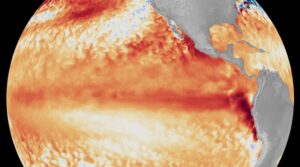 Last week, the National Oceanic and Atmospheric Administration (NOAA) announced that El Niño had developed in the tropical Pacific Ocean and issued an El Niño Advisory. It’s predicted to intensify to a moderate-to-strong level this coming fall and has a 63 percent chance of becoming a very strong event by the end of 2026.
El Niño will be causing extreme weather across the globe starting in 2026, some of extreme heat.
El Niño tends to impact the global climate most significantly in the northern hemisphere winter, but Ken Graham, director of NOAA’s National Weather Service (NWS) stated,
“Every El Niño is not the same; each one is unique with its own imprint on our weather.”
The World Meteorological Organization concurs with NOAA’s predictions. Their outlook is that El Niño conditions will significantly influence global temperatures and rainfall patterns, increasing the risk of extreme weather over the coming months. Part of their forecast is above-average temperatures across the globe from June through August, the heart of summer in the northern hemisphere.
 In the U.S., temperatures in the southern and western states are expected to be 2°F–5°F above normal, but in the Midwest and northeastern states, 5°F–10°F above normal. The U.S. has already seen temperatures in the northeast in the mid 90’s°F this month, more than 10°F above normal. Central and northern Europe are expected to experience early-season heat waves that will persist throughout the summer, with temperatures reaching 10°F–20°F above normal.
For travelers, this means we must be prepared for extremely hot weather this summer when vacationing anywhere in the northern hemisphere over the next three months.
According to a study published last year in JAMA Network Open by researchers at the Yale School of Public Health, deaths associated with high temperatures climbed by 53 percent, from an annual average of 2,670 between 2000 and 2009 to more than 4,000 between 2010 and 2020. Dr. Kai Chen, PhD, professor of epidemiology at Yale, said,
“These findings underscore that extreme temperatures are significant threats to human health.”
Heat-related illness:
Fortunately, while heat-related illnesses are serious, they’re also largely preventable. With good planning, smart packing, and properly taking care of ourselves, travelers can prevent heat-related illness, even during a heat wave.
When in high heat, travelers must remember that high humidity typically exacerbates the body’s response to heat. Moreover, heat exhaustion, which affects many people during heat waves, must be taken seriously, as it can quickly escalate into heat stroke, a medical emergency that, according to experts, must be treated by a medical professional immediately.
Older travelers and travelers with infants and young children, plus those with chronic medical conditions, must recognize that they are more at risk of heat-related illnesses than healthy adults.
Booking summer accommodations:
Ensure that any home, villa, apartment or hotel you book has true air conditioning, not just ceiling or other fans this summer. This is generally less of a problem in the U.S. compared to Europe, but even in the U.S. never assume air conditioning. Before booking your accommodations, ask if you have any doubts. If it’s a rental property, get written confirmation of air conditioning.
For accommodations other than hotels, ask if it’s central or room-based air conditioning. If room-based, ask which rooms are and are not air-conditioned. If the room is air-conditioned, ask if they are window or through-the-wall units. Ask if you can control the thermostat(s) and, if not, what its setting is. If yes, ask what the lowest temperature is you can set it to. You’d be surprised how many rentals limit the thermostat to 76°F-78°F, but tell you the rental has lots of ceiling fans. During a heat wave, fans don’t help very much.
When you arrive at your destination, immediately ensure the air conditioning is working.
Renting a car:
Make sure the rental car you reserve this summer is air-conditioned. When you pick it up, be sure that it works well. A few years ago, I rejected two cars at the New Orleans airport due to substandard air conditioning. It barely worked in the first car and not at all in the second. After wasting an hour, I asked for and got a 20 percent discount on the rental, in writing.
Summer skin protection:
Hot, sunny weather requires skin protection. According to health experts, the sun’s ultraviolet (UV) rays can damage your skin in as little as 15 minutes. Dr. Dawn Davis, a Mayo Clinic dermatologist, recommends sun screen with a minimum of SPF 30. Everyone six months and older should wear sunscreen when outside. Infants and babies should be kept out of the sun.
Make sure you apply sunscreen generously and frequently to get its full SPF protection. Most people don’t use enough, nor reapply it as often as needed. Along with sunscreen, pack and wear a wide brimmed, UV-rated hat. Baseball caps don’t provide adequate protection because they don’t protect your ears or the back of your head.
Packing for protection:
Pack and wear UV-protective sunglasses. Pack comfortable clothing that wicks perspiration from your body. Use light colored clothing for daytime. Wear dark colored clothing solely for evening wear. Dark colors absorb sunlight, heating your body. Pack an empty water bottle to fill yourself, as disposable water bottles, if you still use them, may not be available at your destination. I pack a metal insulated water bottle. If you’re concerned about local water quality, bring an electronic UV purifier and a water filter.
Our bodies:
Our bodies need time to adjust to the heat. If you’re mostly in air conditioning, but while on vacation are outside for daily activities, beware that your body likely isn’t ready to handle extreme heat stress. It may take several days to acclimate yourself.
Avoid alcoholic beverages, even a cold beer that might seem refreshing. Alcohol dehydrates everyone and in hot weather it will dehydrate you even faster than normal. Avoid coffee, tea and colas, too. They are diuretics and will dehydrate you quickly in hot weather like alcoholic beverages.
Hydrate. Drink water even before you feel thirsty in hot weather. When you feel thirsty, it often means that you’re already dehydrated by 10 to 25 percent. Outside the U.S., don’t expect to be automatically served water at meals. While you might be charged for it, order and drink it anyway.

Daily planning:
During the heat of the day, plan activities in air-conditioned spaces. Get an early start in the morning before it gets hot. Walk on the shady side of the streets during the day. Consider evening tours in summer when it’s cooler, but still light.
Track the weather:
Know what’s happening with the weather at your destination(s) before you leave and while you’re traveling. Check your destination’s weather news repeatedly before you leave and once you’re there.
You could easily ruin your vacation by not taking hot weather seriously. Plan for it. Pack for it. Take appropriate measures to stay safe and healthy despite the hot temperatures outside.
READ ALSO:
National Consumer Protection Week happened — airline passengers didn’t notice.
No summer for a cruise

After many years working in corporate America as a chemical engineer, executive and eventually CFO of a multinational manufacturer, Ned founded a tech consulting company and later restarted NSL Photography, his photography business. Before entering the corporate world, Ned worked as a Public Health Engineer for the Philadelphia Department of Public Health. As a well known corporate, travel and wildlife photographer, Ned travels the world writing about travel and photography, as well as running photography workshops, seminars and photowalks. Visit Ned’s Photography Blog and Galleries.