Severe winter weather has hit North America, Europe, and northern Asia. Snow, ice, and particularly “black ice” on the road make them dangerous. I’ve got 19 tips to help you stay safe while driving in winter weather.
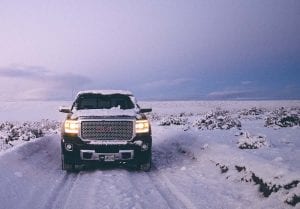 According to the National Weather Service, severe winter weather has hit. During the last 72 hours, snow hit the country in the Denver area and the northeast, dropping from 6–24 inches of snow, affecting both areas significantly. There are more winter weather forecasts of snow, cold, and icy roads, making those winter driving road trips extra hazardous if you’re not prepared.
Here are my top 19 tips for your winter driving travels, whether in a rental car or your own vehicle.
Before driving in winter weather, you must understand its challenges, pay attention to weather forecasts and be sure your vehicle is winterized.
Understand winter weather’s challenges:
Driving through sleet, snow and ice is dangerous. You don’t want to attempt those rabbit starts. You’ve got to remember that stopping takes considerably more distance in snowy, icy or merely wet conditions. When the temperature is near freezing and below you must be perpetually ready for “black ice,” a thin, transparent, virtually invisible coating of ice on road surfaces that allows the black road to show through. It’s formed by rain or melting snow/slush freezing on cold road surfaces, especially on bridges. If black ice conditions exist, drivers must assume it’s there.
Pay attention to weather forecasts at your destination and along your route:
Don’t hesitate to alter your plans according to weather conditions.
Ensure your windshield wipers are in working order:
They need to sweep freely and follow the contour of your windshield properly, without streaking.
Insure your windshield washer reservoir is filled with “de-icer” fluid:
Top off the reservoir with de-icer so you’ll have ample fluid to clean your windshield as needed.
Ensure your car has an ice scraper:
If not, buy one.
Don’t overestimate your car’s braking capability. All cars have four-wheel brakes. A four-wheel-drive vehicle can get you out of a snow drift better than two-wheel-drive cars, but it can’t help you brake faster than they do on slippery highways.
Know your vehicle’s braking capabilities:
Many four-wheel-drive vehicle drivers believe they have an advantage on ice and snow. They don’t. All cars, four-wheel-drive, all-wheel-drive, and front- and rear-wheel-drive, have four-wheel braking systems.
 The “3–second rule” isn’t enough in winter:
In dry weather all drivers should follow the “3–second rule.” This means there should be at least 3 seconds of driving time between you and vehicles in front of you. In wet weather, particularly in icy weather, you need to be much further behind vehicles in front of you.
Ensure your tires have enough tread and are properly inflated to be sure they’ll brake as well as possible on snow and ice.
Ensure that your tire tread is more than sufficient:
Tire Rack recommends drivers expecting to encounter snow-covered roads have at least 6/32” (0.5 cm) of remaining tread depth on all vehicles’ tires. Tires need adequate tread depth to compress snow in their grooves and release it as they roll to provide essential vehicle traction and mobility. Even if you’re renting a car, check the tire depth.
Ensure your tires are properly inflated:
Make sure all your car tires are properly inflated. Include in the inspection your spare tire, whether a full-size spare or a donut/space-saver. When correctly inflated, tires are safer and less likely to fail at high speeds. Improperly inflated tires increase stopping distances, will skid longer on wet surfaces, and are less able to prevent vehicle turnovers.
Be sure your car has a spare tire and that it’s inflated properly. Make sure you have a complete working jack system too, and know how to use it.
Speaking of spare tires:
Never assume that your rental car has a spare. Be certain your car has a spare and that it’s properly inflated. I never recommend renting a car that relies solely on a tire inflator kit. Inflator kits can’t overcome large punctures or sidewall damage. A reader wrote to me earlier this year about his driving trip to Monument Valley. On the way, he got a sidewall puncture. His rental car only had an inflator kit. It took him five hours to get a flat-bed tow truck. The drive to the garage took an additional three hours. Upon arrival, the garage was closed. He and his family had to stay at a nearby motel overnight. If the car had a spare, he wouldn’t have lost the day.
Ensure that your car has a complete, working jack system:
To use a spare tire, you’ll need a jack assembly in your car. Make sure it is there, and it’s an entire jack assembly. Be certain you know how to use it. Know where you can safely place the jack under the car to change the tire.
Driving an EV? It has less battery power in cold weather, meaning a shorter range.
Electric vehicles (EVs) have cold weather battery limitations:
When the temperature drops to 20°F (-7°C) or lower, EVs can lose 30 percent or more of their available power. That’s due to the effect of the cold temperature on battery chemistry and from increased power use to heat the EV’s interior and/or run the windshield and window defrosters. That means you’ll significantly lose much of the EVs range. Make your charging decisions accordingly. In cold weather, be sure you know how to use the EV’s preconditioning system to combat cold weather’s effect on the EV’s battery.
Make sure your car’s antifreeze level is adequate if driving in cold weather:
You don’t want the engine to fail due to a lack of antifreeze.
Don’t use cruise control on snowy or icy roads:
Cruise control often reacts unexpectedly on wet roads if your car slips or slides, so turn it off.
Bring a full emergency kit with you when traveling in winter weather. Make sure it has a battery jump starter. I had to use one a couple of weeks ago. Keep your fuel tank at least half full in case you get stuck for a prolonged time, far from help.
Keep your fuel tank at least half full at all times:
You never know when a winter weather traffic jam or accident will snarl or stop traffic. Plus, car woes, such as a flat tire, might strand you for hours. You’ll need plenty of fuel, if stuck, to keep warm in winter and keep your battery charged to power your lights for safety.
Carry a car emergency kit:
My car emergency kit for winter travel includes a 1000A car battery jump starter, a blanket, water, snacks, a first aid kit, a small LED emergency flasher, and a flashlight.

Bring a fully charged cellphone with emergency satellite capability with you. Bring a battery-powered pack to recharge it, in case of an emergency.
Have a fully charged cellphone with you in case of emergency:
This is essential whether driving on interstates or back roads. If your cellphone is a smartphone, keep its locator on so friends or family could use an app such as the iPhone’s “Find My,” as an emergency locator. Make sure they have access to find you. In case you get caught on the road for a prolonged time, bring a battery pack to recharge your cellphone. It could be your lifeline.
Consider a cellphone with emergency satellite coverage:
If you’re traveling in areas without cellphone coverage, mostly in western states in many national parks, forests and wildlife areas, bring a cellphone with emergency satellite coverage with two-way messaging, location sending and interactive global SOS capability.
Make sure a third party has your itinerary and driving route:
Give a friend or family member your itinerary, driving route, and arrival times. If you don’t arrive at your destination on time and you’re unreachable, they can contact local authorities and tell them where to search for you. Have regular check-ins with them.
Driving in severe winter weather, through sleet, snow, and freezing rain, on roads covered with rain, snow, slush, and unseen black ice, is difficult. It can be dangerous. Driving in winter weather requires common sense and solid judgment. If you’re unfamiliar with winter driving, take special care: driving in snow and on ice requires skill and attention.
READ ALSO:
Mobility-Friendly Travel Guide from National Council on Aging
Six Christmas dreams for travelers in 2026

After many years working in corporate America as a chemical engineer, executive and eventually CFO of a multinational manufacturer, Ned founded a tech consulting company and later restarted NSL Photography, his photography business. Before entering the corporate world, Ned worked as a Public Health Engineer for the Philadelphia Department of Public Health. As a well known corporate, travel and wildlife photographer, Ned travels the world writing about travel and photography, as well as running photography workshops, seminars and photowalks. Visit Ned’s Photography Blog and Galleries.