When airlines fail, passengers pay the price. Congress should bring back the rule that helps consumers.
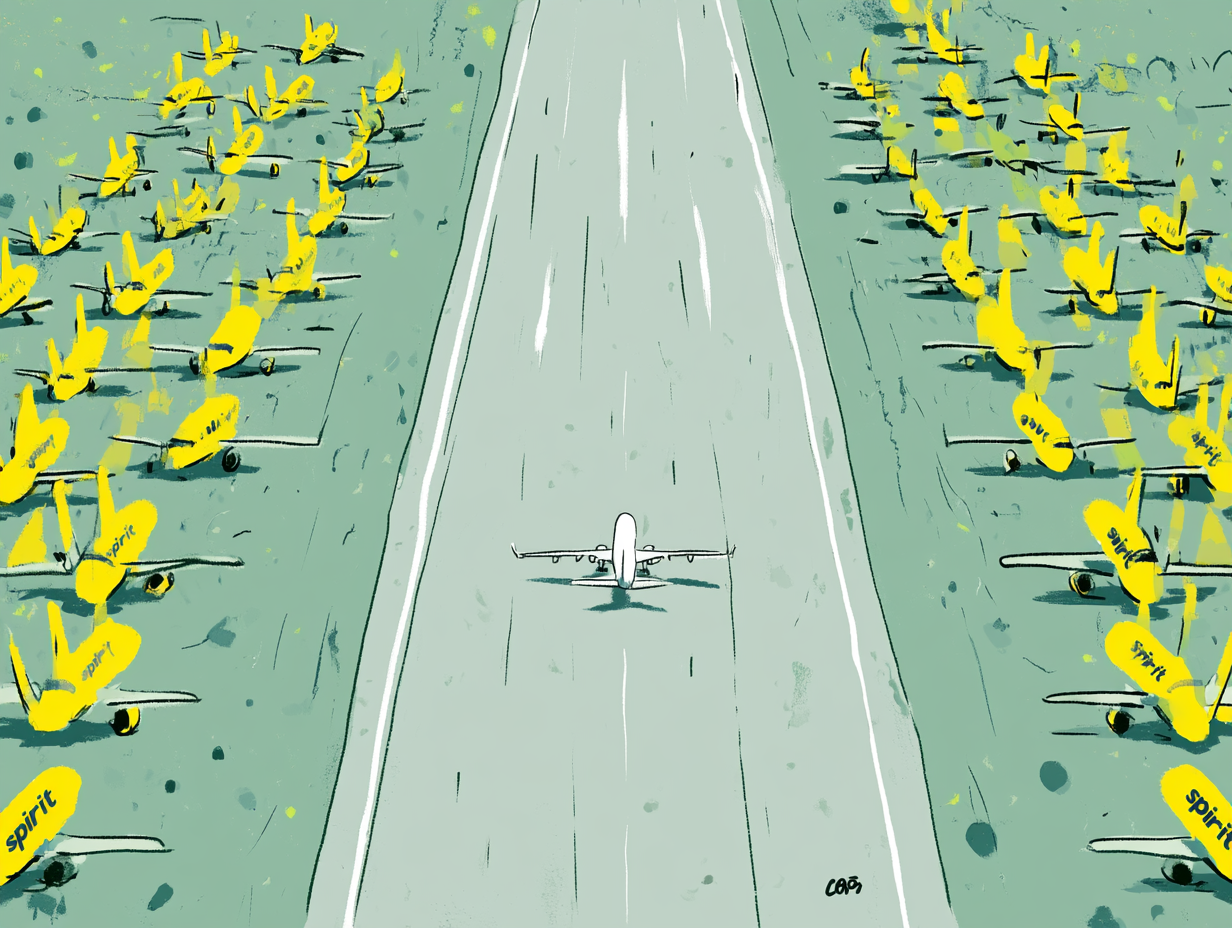
Tens of thousands of Spirit Airlines passengers showed up at the airport last week and discovered their tickets were worthless.
They could have scrambled for a last-minute fare on another airline, sometimes at three or four times the original price. They could have disputed the charge with a credit card company. But all too often, they just canceled their trip.
The worst may be ahead. JetBlue is reportedly in financial distress. Several ultralow-cost carriers — the no-frills airlines like Frontier, Allegiant and Avelo that built their model around bare-bones fares and piled-on fees — have lined up at the federal aid window.
There will be more Spirits, and probably soon.
I know because my inbox tells me so. Hundreds of emails, all variations on the same theme: I bought a ticket on a low-cost airline, and I’m really worried.
 What happened to Rule 240?
If you flew before the government deregulated the airline industry in 1978, you might remember Rule 240. The Civil Aeronautics Board required airlines to put bumped or stranded passengers on the next available flight, including a competitor’s, at no extra cost.
Then deregulation arrived, and Rule 240 quietly disappeared. Air travelers were at the mercy of an airline when a bankruptcy happened. Sometimes, that left them with a worthless ticket.
Congress brought a version of it back after 9/11. Section 145 of the Aviation and Transportation Security Act required carriers to honor a failed competitor’s tickets “to the extent practicable.” But it was also temporary, and it expired in 2005.
Now, there’s no protection at a time when we need it most.
A credit card chargeback isn’t the answer
The airline industry’s standard response is to cite the Fair Credit Billing Act and to file a chargeback.
Not really. A refund — if you can get it — won’t help you get to your destination. And walk-up fares, which are priced for business travelers on an expense account, are beyond the reach of most travelers.
Your bank can’t fix a systemic aviation failure any more than it can revive Spirit Airlines or any of its ailing competitors. But thoughtful government policy can.
Can the Department of Transportation fix this?
To its credit, the Department of Transportation (DOT) issued Order 2026-5-1 within days of Spirit’s shutdown. The order encourages other airlines to offer reduced rescue fares to displaced Spirit passengers. Some carriers stepped up, but others didn’t.
Here’s the catch: The DOT can only encourage. It can’t compel. Its authority to mandate ticket honoring evaporated when Section 145 sunsetted. So we’re back to voluntary cooperation, a phrase that, in airline industry context, means “we’ll do this if our revenue managers say it’s OK.”
Every time another carrier goes under, hundreds of thousands of Americans will discover what their tickets are actually worth, which is whatever the remaining airlines decide.
Here’s what a consumer protection rule would look like
I’d start simple. Reinstate Section 145 with three updates.
- First, make it permanent. The cycle of airline failures isn’t going away, and neither should the law that protects passengers from it.
- Define “to the extent practicable” with actual standards. A capped rescue fare — say, 150 percent of the original ticket price, with the difference recoverable from the failed carrier’s bankruptcy estate. An honor period of at least 14 days. Available seats on competing routes on a space-available basis within 72 hours.
- Then give the DOT enforcement teeth: Civil penalties for carriers that refuse without good cause and a fast-track complaint process for stranded passengers.
Will the airline lobby fight this? Of course. The legal environment has rarely been more hostile to consumer protections in general, but particularly in aviation. Airlines for America just won a major court case vacating the DOT’s junk-fee disclosure rule.
That puts this in Congress’s hands, which could solve the problem with legislation that protects American air travelers.
Can you require a private business to help?
Actually, there’s a precedent for this type of federal mandate.
U.S. airlines operate on public infrastructure that taxpayers build and maintain. The Federal Aviation Administration runs the air traffic control system that keeps air travel safe. Its budget for fiscal 2025 is roughly $21 billion, paid for largely by the Airport and Airway Trust Fund and topped up by the general taxpayer fund.
Commercial airports in the U.S. are almost entirely owned and operated by state and local governments. The Airport Improvement Program steers billions more in federal grants to airports each year. The Essential Air Service program props up routes that wouldn’t otherwise exist, paying carriers as much as $650 per passenger to keep small communities connected.
Without taxpayers, there is no airline industry.
And the public has a long tradition of attaching strings when private companies use public resources. Railroads got the right to lay track across the country. In return, the Interstate Commerce Act of 1887 made them common carriers, legally obligated to serve all customers on reasonable terms.
Telephone companies got rights of way to string wires across public land. The Communications Act of 1934 made them common carriers too. Even today’s interstate oil and gas pipelines carry common-carrier obligations, ensuring producers can ship without being frozen out.
If you build your business on top of a public good, the public gets a say in how you run it.
After 9/11, airlines accepted $5 billion in direct grants and $10 billion in loan guarantees. After COVID-19, they took more than $50 billion through the Payroll Support Program. In return, they agreed to maintain service, cap executive pay, and eventually drop change fees on most tickets. None of those concessions destroyed the industry. Most are still in place.
Asking airlines to honor a failed competitor’s tickets at a capped price is the cost of running a business on the public’s runways.
READ ALSO
Beware! Phone calls on British Airways are permitted, but should they be?
20 tips to make travel better during the summer period

Christopher Elliott is the founder of Elliott Advocacy, a 501(c)(3) nonprofit organization that empowers consumers to solve their problems and helps those who can’t. He’s the author of numerous books on consumer advocacy and writes three nationally syndicated columns. He also publishes the Elliott Report, a news site for consumers, and Elliott Confidential, a critically acclaimed newsletter about customer service. If you have a consumer problem you can’t solve, contact him directly through his advocacy website. You can also follow him on X, Facebook, and LinkedIn, or sign up for his daily newsletter.