
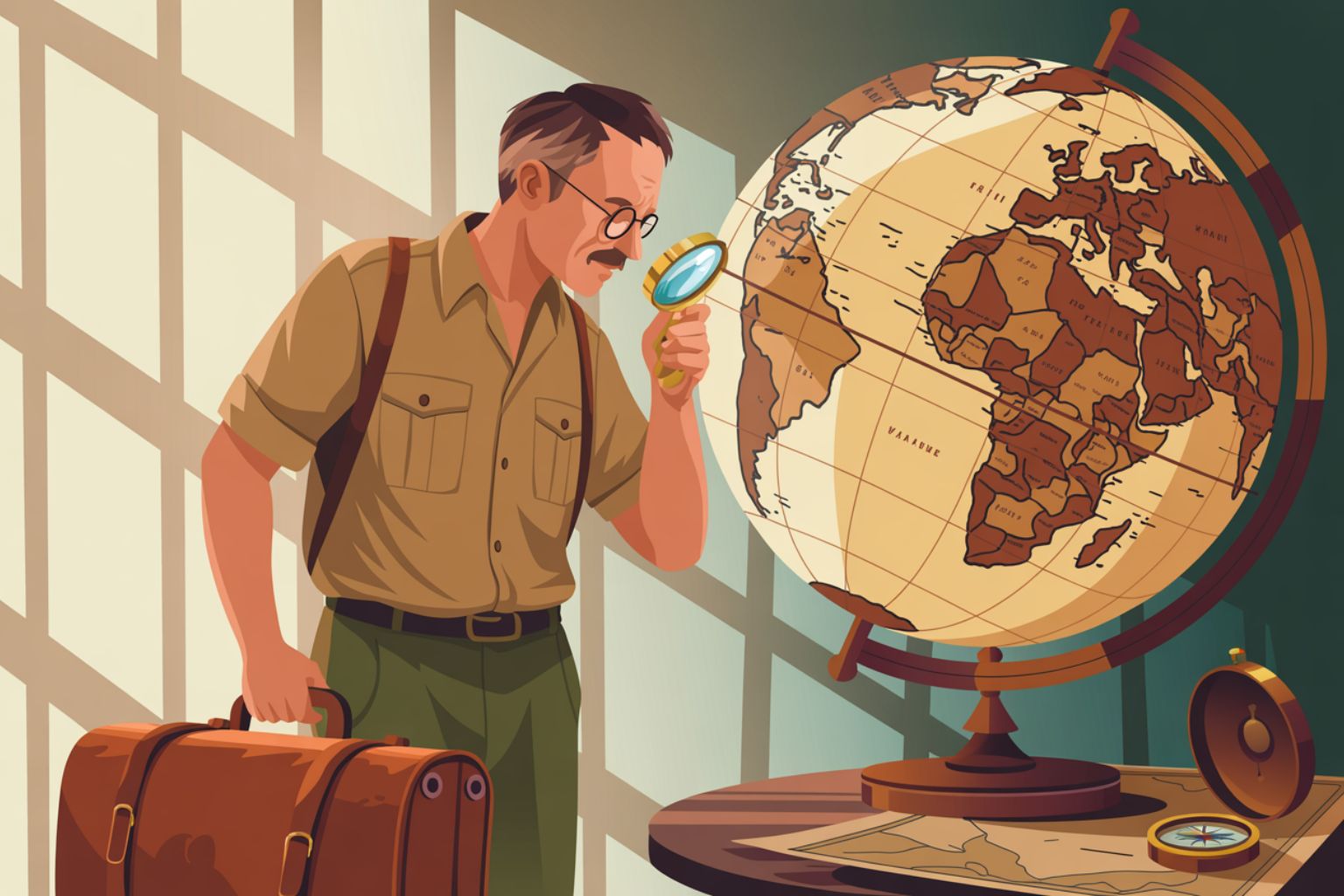
 He had a trip to Colombia added to his bucket list — then he received the crime reports.
- A traveler cancels a dream trip to Colombia after discovering a surge in unreported crime, highlighting the gap between official advisories and reality.
- Experts warn that 2026 travel carries unique risks, requiring travelers to cross-reference government warnings with real-time social media and local insights.
- Find out how to assess your personal risk tolerance and use pro strategies — like checking multiple data points — to decide if a destination is safe for you.
Colombia has been at the top of his bucket list for years
 He recently started planning a solo trip to Cartagena and Medellín. He looked forward to sipping tinto coffee at a cafe and strolling the beach at Playa Blanca.
The destination seemed safe at first, but then came a U.S. State Department travel advisory warning of an increase in crime. And then he started to do more research, reading local crime reports and talking to Colombian expats on Reddit and Facebook.
That’s when he started to have second thoughts.
“The tipping point was a pronounced surge in robbery and kidnapping of tourists in cities, much of which went unreported in the mainstream travel press,” says Malloy, an attorney from Bethesda, Md. “I wondered: Would I feel safe walking alone at night, or taking a rideshare to a more casual location? The honest answer was no.”
He canceled his trip.
Malloy isn’t alone. It’s been a busy year for government travel warnings, but those notices don’t address the personal risk factors to an individual traveler. And as a result, many travelers are wondering how to answer the question: Is the place I’m planning to visit safe?
Can you believe crime reports on destinations?
Seann Malloy canceled his bucket-list trip to Colombia after finding alarming crime reports on Reddit that official government advisories missed. It raises the question: Who do you trust when planning a trip? We want to hear your thoughts.
- Do you trust State Department travel advisories to give you the full picture, or do you rely more on social media and expat forums?
- Have you ever canceled a trip because you got a “bad feeling” from your research, even if the official warnings were mild?
- Is the world actually getting more dangerous for travelers, or does the internet just make us more aware of the risks?
How do you determine if a destination is safe?
As travelers start thinking about their 2026 trips, personal safety is coming into focus.
Andrew Coggins, a management and international business professor at Pace University, says determining how dangerous a place is can be tricky. It’s a balance between your own risk tolerance and the conditions on the ground. But he says Malloy followed the right steps.
“Some key indicators of dangerous destinations are unstable governments, civil unrest, and high crime,” he explains. “These don’t always get above the news radar, but watching and listening to vetted news sources with a global outlook can keep you abreast of what’s going on around the world.”
Pro strategies for figuring out travel risk in 2026
Experts say travel next year will be fraught with risks, including crime to geopolitical turmoil. But there are ways to ensure you know the dangers before you commit to a trip.
Cast a wide net. No single source is completely reliable, according to John Rose, chief risk advisor for ALTOUR, a global corporate travel management company. “Safety is dynamic, so it’s essential to cross-reference data points, from crime trends to health infrastructure to geopolitical stability, rather than rely on a single source,” he says.
Check official and unofficial sources. Sure, the State Department is an official source, but don’t stop there when looking for safety advice, says Harding Bush, associate director of security operations at Global Rescue.
“To assess the safety of an international destination, start by examining the U.S. Department of State travel warnings and other countries’ travel ratings like the U.K. Foreign Commonwealth Office and Canadian travel advice and advisories,” he says. Unofficial sources can be important as well, he notes. “Ask friends or colleagues who have recently visited the area whether it is considered stable, or if it is a conflict zone or near one, while also identifying any violent factions present.”
A top comment that I had never thought of.
I always feel a bit lost trying to decipher State Department warnings, which can feel permanent and unyielding. The tip about cross-referencing with UK and Canadian advisories is smart. I had never thought to do that.
It is refreshing to read a balanced perspective that empowers us to do our own research rather than just telling us to stay home.
READ ALSO:
How the FAA will integrate rockets, drones, and flying cars into our sky.

Christopher Elliott is the founder of Elliott Advocacy, a 501(c)(3) nonprofit organization that empowers consumers to solve their problems and helps those who can’t. He’s the author of numerous books on consumer advocacy and writes three nationally syndicated columns. He also publishes the Elliott Report, a news site for consumers, and Elliott Confidential, a critically acclaimed newsletter about customer service. If you have a consumer problem you can’t solve, contact him directly through his advocacy website. You can also follow him on X, Facebook, and LinkedIn, or sign up for his daily newsletter.