Airline water is unsafe to drink. It has made drinking airline water, coffee, and tea unsafe, as well as washing in plane lavatories.
 Airline water is unsafe to drink. Many air travelers like a good cup of hot coffee or tea to steel their nerves while flying. On long flights with meal service, airlines serve fresh coffee or tea. It accompanies breakfast and dinner and is a must for many.
The problem is that on most U.S. airlines, drinking coffee, tea or a glass of water can be dangerous to one’s health.
In 2004, the Environmental Protection Agency (EPA) found that the airlines’ aircraft onboard drinking water systems were out of compliance with the National Primary Drinking Water Regulations. Four years later, EPA proposed an aircraft drinking water rule. In October 2009, EPA established the Aircraft Drinking Water Rule (ADWR), which went into full effect in 2011.
The ADWR was written to protect airline passengers and crew from contaminated water in airplane galleys and lavatories.
The ADWR is supposed to protect aircraft passengers and crew by protecting “against disease-causing microbiological contaminants through the required development and implementation of aircraft water system operations and maintenance plans.” The plans must include routine disinfection and flushing of the water system, training for key personnel and regular system inspections and testing of the onboard drinking water.
Unfortunately, it appears that most of the U.S. airlines are not fulfilling their obligation to provide safe water in their aircrafts’ public water systems.
The CFML 2026 airline water quality study shows that too many airlines continue to have contaminated water in their planes.
At the end of 2025, the Center for Food as Medicine and Longevity (CFML) released its 2026 Airline Water Study. It revealed that the quality of drinking water varies significantly by airline and that many airlines continue to violate the ADWR by not providing safe water for passengers and crew.
The three-year study ranks 10 major and 11 regional airlines by the quality of water they provided from October 2022 through September 2025. The water safety scores go from 0.0 to 5.0, with 5.0 as the top rating.
Among major U.S. airlines, Delta scored the best and American the worst for contaminated water on their planes.
 Of the major US airlines, only Delta Airlines scored 5.0, for an “A” grade. Frontier Airlines, with a score of 4.80, also got an “A.” Alaska Airlines and Allegiant Air both received a “B.” Southwest Airlines, Hawaiian Airlines, and United Airlines all received a “C.” Spirit Airlines, JetBlue and American Airlines all received a “D.” American Airlines’ score of 1.75 was at the bottom of all U.S. major airlines.
Gojet airlines led the regional airlines with a “B.” All the other regional airlines were at “C” or lower. Mesa Airlines scored just 1.35 for an “F.”
A “C” or better indicates that the airlines’ water is relatively safe, though not necessary always safe. Among the major airlines, Spirit Airlines, JetBlue, and American Airlines are in the generally unsafe category. Among regional airlines, Gojet Airlines, Piedmont Airlines, Sun Country Airlines and Endeavor Air are the only ones considered relatively safe. The rest of the regional airlines are in the generally unsafe category, according to the study.
The study analyzed 35,674 total sample locations and tested them for total coliform bacteria across all airlines. Of these, 949 locations tested positive for total coliform. Coliform bacteria itself isn’t typically the cause of serious illness, but they’re easily tested and their presence infers that other pathogenic organisms of fecal origin are likely present and that the origin of the sample isn’t safe to consume. They are such a strong safety indicator that all drinking water sources are tested for total coliform bacteria.
The CFML study found too many incidents of E. coli in the water in aircraft water supply systems for galleys and lavatories.
The study found max contaminant level violations for E. coli. CFML says that was the strongest downward driver of airline scores in their study. There were 32 E. coli violations found during the study’s window. E. coli can cause diarrhea, stomach pain and cramps, abdominal or pelvic pain, a burning sensation when you urinate, a need to urinate frequently and cloudy, foul-smelling urine. Newborns and seniors, those with weakened immune systems, those taking immunosuppressive drugs, or who have diabetes or ulcerative colitis are particularly susceptible to disease from E. coli.
There are numerous potential health risks from ingesting contaminated aircraft drinking water. They include acute gastrointestinal illness and a variety of opportunistic pathogens. Vulnerable populations, as mentioned above, may face elevated risks from waterborne pathogens.
Aircraft water systems are complex but they can be kept clean so the water in them remains safe.
Unlike most municipal water systems, which generally have a continuous, steady source of potable water that they constantly treat and monitor, planes get their water tanks filled irregularly and from a large variety of airport facilities with disparate quality. Moreover, the water is stored in aircraft tanks under constantly changing temperatures and pressures. In addition, the water must travel through a complex plumbing system of valves and pipes to the aircraft’s galleys and lavatories. That makes it difficult to keep an aircraft’s water safe, but as evidenced by Delta Airlines’ score, it’s not impossible.
The quick aircraft turn-arounds that commercial airlines require doesn’t help them solve the difficult logistical problems that prevent most of the airlines from maintaining safe drinking water on their planes. Not only do the airlines have to keep the water systems clean and safe in the aircraft, but the airport systems of delivering water to the aircraft must be just as clean and safe. That means hoses, connecting nozzles, and tank trucks have to be rigorously maintained. A single upload of water from a tank truck with a contaminated hose can contaminate dozens of aircraft in a single day.
Somehow, Delta has generally figured it out. They’re currently able to maintain relatively safe water in their aircraft. They’ve determined how to keep their aircraft water systems and their airport water supply systems clean and safe. They seem to have overcome most of the problems of aircraft water contamination as well as the logistics of filling up with uncontaminated water at airports.
The CFML study leads us to important conclusions.
EPA earns a failing grade for failing to enforce its rules and regulations. Many are essential in protecting air travelers in the U.S. In 2019, another study of water quality, unfortunately, found a similar bottom line to the new CFML study. Since the 2019 study, aircraft water quality has barely improved. So blame for this has to be shared between the Biden and Trump Administrations’ EPA. Moreover, with the EPA greatly weakened under the current Trump Administration, there seems to be little hope of improved enforcement over the next three years, which, in turn, likely means continued poor airline water safety.
Nevertheless, we must call on EPA to finally start enforcing the ADWR, as required by law.
For air travelers, the study’s implications are significant.
The water tanks in modern aircraft supply both the lavatories and the galleys. Hence, I continue to recommend:
1. Never drink water onboard an aircraft that isn’t in a sealed bottle.
2. Never drink any beverage that uses the aircraft’s water. That means don’t drink the coffee or tea on your plane flights.
3. Never eat any food on a plane that was washed in the plane’s water.
4. Never wash your hands in an aircraft lavatory sink. Use alcohol sanitizer wipes with at least 60 percent alcohol instead.
These four practices will help to prevent water borne illness from flying.
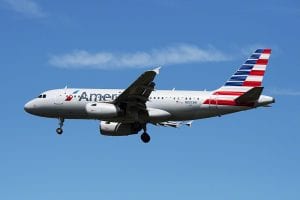
Image: American Airlines A319 landing at Philadelphia International Airport. Copyright © 2018 NSL Photography. All Rights Reserved. All TDM and AI Training are Prohibited.)
READ ALSO:
Passengers pay for airports now — look elsewhere for more money
DOT denied boarding (or bumping) compensation rules you should know

After many years working in corporate America as a chemical engineer, executive and eventually CFO of a multinational manufacturer, Ned founded a tech consulting company and later restarted NSL Photography, his photography business. Before entering the corporate world, Ned worked as a Public Health Engineer for the Philadelphia Department of Public Health. As a well known corporate, travel and wildlife photographer, Ned travels the world writing about travel and photography, as well as running photography workshops, seminars and photowalks. Visit Ned’s Photography Blog and Galleries.