In Part 1 of Choosing your cruise ship cabin carefully, I discuss the plusses and minuses of cabin location, inside vs. outside, forward vs. aft, upper vs. lower deck.
 While cruise ships may have twenty or more categories of cabins, there are actually just five main cabin types: inside, inside view, ocean view, balcony and suite. The other categories are variations of these cabin types, distinguished by cabin size, view, physical location (forward to aft, starboard and port, deck (upper to lower) and service amenities. The price of each cabin depends on all the factors and what the cruise line thinks their customers will pay for the cabin of their choice.
While typically cruisers are only in their cabin for a minimal time compared to the cruise as a whole, it’s still a very important choice, every bit as important as choosing a room in a hotel with many more options than typical hotel rooms. Cabin decisions can affect a travelers sleep, comfort and daily preparedness. I’ve got the important issues that cruisers should consider when they are ready to choose their cabin.
Below, I discuss the three location issues that affect each of the individual cabin categories, from inside vs. outside to forward vs. aft to upper vs. lower decks.
While the main difference between inside and outside cabins is price, there are other factors to consider before choosing either one.
Inside vs. Outside Cabins:
There are more similarities between inside and outside cabins than most new cruisers realize. Unless the cabin is for a single person, they both have beds that can be kept separate as twin beds or converted to what is known as a European king, a bed that’s larger than a standard queen, but smaller than a standard king bed. Both cabins typically have standard bathrooms with a shower, sink, some storage, a toilet, etc. The cabins are typically similar in size to standard cabins and are outfitted with ample closet and drawer space. Each of the cabins have a desk/vanity area with large mirrors and additional drawers and/or shelf storage.
The essential difference, of course, is that inside cabins don’t have a window, while outside cabins have a window or sliding doors to allow you to see outside the cabin and have natural light come through. There are some ships that have video windows in inside cabins. Video windows are high definition computer screens to which the ship streams live video from exterior cameras on the ship. While the video windows don’t provide an inside cabin with natural light, they do allow passengers to see what’s going on outside the ship.
Inside cabins are typically less expensive than outside cabins of any type. If you feel that you have to have natural light and a look outside, then choose an outside cabin, but if you want to save some money you might consider an inside cabin.
Some of the mega-ships have an inside view cabin available. These inside cabins have actual windows and some may even have a small balcony, but they don’t face the ocean. Instead they face an interior central area of the ship. Like inside cabins generally, these cabins are less expensive than outside cabins. For some cruisers inside view cabins are a good compromise, while still offering real fare savings compared to outside cabins.
Personally, the inside view cabin is my least favorite on any ship, because privacy is normally a problem with them. On the ships that have inside view cabins, they are typically facing a central public area straight across and directly looking into another inside view cabin on the other side of the same central public area. Outside cabins face the ocean, not another cabin or an unrestricted public area of the ship.
When choosing between cabins that are forward, aft or at midships and in between, sea sickness, cabin layout, cabin size and the view should be considered prior to selecting a cruise ship cabin.
Forward vs. Midships vs. Aft Cabins:
if you haven’t figured out nautical lingo, the front of the ship (bow) is forward and the back of the ship is aft (stern). Midships is the center of the ship.
To me, the big plus in staying in a forward cabin on a cruise ship is that when you look out, you’re among the first passengers to see where you’re heading. It is an extremely interesting view to have as you enter each port. It’s important to note that before booking a forward cabin that you must check their floor plans, as on some ships, the layouts are unique. On the other hand, if you’re worried about seasickness, stay away from forward cabins. In rough seas forward cabins feel the brunt of the waves even on lower decks, but it’s more pronounced on upper decks.
Aft cabins let cruisers see where the ship was. They’re often great for photographing a port as you leave it. Often aft cabins are among the larger cabins on the ship. While the motion in aft cabins is less difficult than forward cabins, in rough seas, if you have concerns about seasickness, I recommend skipping aft cabins too. Another problem that I’ve personally run into in an aft cabin is engine noise and vibration from the propeller pods.
Midships cabins are the ones at the central core of the ship between the forward and aft cabins. The closer to the center of the ship along its length, the more stable the ship will be in rough seas. Please note that modern cruise ships have stabilizers to smooth out the ride, however, in rough seas, I rather be near the center of the ship.
When deciding on a cabin on an upper versus a lower deck the cost, view, sea sickness and noise are factors to consider when choosing a cruise ship cabin.
Upper Deck vs. Lower Deck Cabins:
Generally the attractiveness of lower deck cabins is price. These cabins are normally more affordable than the ones higher up. In the past, some experts recommended lower decks for mobility impaired passengers because of their proximity to medical services, laundry facilities, and on some ships, wider hallways. On older ships, the majority of accessible cabins were on lower decks. On many newer ships accessible cabins may be on upper decks too.
To me, the biggest downside of lower decks is the view. I’ve personally found that the two lowest decks on cruise ships that I’ve been on can be noisy compared to upper decks, particularly in ports and in the time immediately following departing the port, due to noise from the lower working areas of the ships which are particularly busy at those times.
The big bonus of cabins on upper decks is the view. Typically, the higher the deck, the better and more panoramic the view. On the other hand if you’re prone to seasickness the further away you are from midships on the upper decks the rockier the ride in rough seas. It will be worse on upper decks compared to the same location forward to aft on lower decks. Upper deck cabin pricing is higher than similar cabins on lower decks. Many of the activities for passengers such as the pools, sports activities and dining facilities are on the upper decks, so noise from passenger activity can be troublesome on those decks too.
In Part 1, I’ve discussed the general location of cruise ship cabins which will greatly affect their affordability, view, noise that can be disruptive and the stability of the cabin in rough seas, as well as other factors. In Part 2, I will discuss some of the specific types of cabins and cabin problems to avoid by booking the right cabin for your needs.
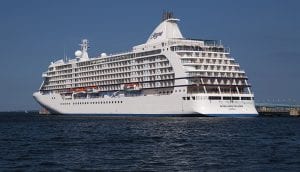
(Image: Regent Seven Seas Voyager at Tallin, Estonia. Copyright © 2018 NSL Photography. All Rights Reserved.)

After many years working in corporate America as a chemical engineer, executive and eventually CFO of a multinational manufacturer, Ned founded a tech consulting company and later restarted NSL Photography, his photography business. Before entering the corporate world, Ned worked as a Public Health Engineer for the Philadelphia Department of Public Health. As a well known corporate, travel and wildlife photographer, Ned travels the world writing about travel and photography, as well as running photography workshops, seminars and photowalks. Visit Ned’s Photography Blog and Galleries.