

I watched the recent swapping of airline slots between Delta Air and US Airways and between AirTran and Continental. Once upon a time, the airlines were howling when the FAA wanted to limit landing and take-off slots at La Guardia, Newark and JFK as a solution to overcrowding of the airspace. They claimed that Congress never explicitly gave the FAA the right to auction slots.
Has Congress given the airlines explicit rights to trade federal assets? And what about the consumers?
Whenever and airline executive mentions “strengthen our network,” it is code for “eliminate competition.” Hopefully, someone in the regulatory regions of the U.S. government will take a hard look at how consumers will fair under these cavalier swaps being proposed by the airlines.
So far every article I have found covering this subject has pronounced changes and the effects on the airline industry. No one has taken the time to look at these swaps from a passenger’s point of view and at the elimination of competition that many of the moves portend.
As I look at these swaps, it looks like the major airlines are working at making their fortress hubs more secure. In other words, they want to eliminate as much competition in their hubs as possible. That normally has meant that the consumers are ready to take it in the shorts with higher airfares.
Craig Jenks, who heads Airlines/Aircraft Projects Inc., also believes the swaps are “the right thing to do in the current environment.” Airlines are more worried about yield than volume now, and these moves address that concern by making them stronger in their best markets while reducing competition.
US Airways has added to their already leading position at Washington Reagan. Delta is ensconcing itself in the La Guardia and JFK airports. Delta and US Airways has also swapped coveted international routes that are normally carefully controlled by the FAA. And Continental has added to its position at its Newark hub.
The AirTran move to give up its Newark slots allows it to shut down an all-but-orphaned operation at Newark and shut their entire operation there. The increases at LaGuardia and Washington Reagan (DCA) are welcome, since they will enhance and strengthen low-cost-carrier pressure at both airports.
However, this all begs the question: Shouldn’t the FAA be controlling these slot swaps, rather than allowing the airlines to trade their positions like baseball cards?
When the FAA wanted to cap service, the airlines fought them at every step. Now that they the airlines are making moves without what seems like any serious FAA and DOT studies, it seems like our transportation watchdogs are toothless.
There is still time for the DOT and FAA to act. The slot exchange is expected to start sometime in early 2010, and the final parts of the agreements probably will not fall into place until next fall.
The least they can do is take a close look at how this will shape competition in each of the airports concerned. They need to take into consideration airline alliances as they make their assessments. It is obvious that US Airways controlling DCA and their partner United Airlines with a giant footprint at Washington Dulles smacks of coordinated power-sharing. US Airways virtual abandonment of Newark also seems to play into their coming alignment with Continental that dominates that hub.
From an international point of view, the competition for the routes in question should be reopened so those airlines who bid for the routes can compete again for the routes and the international revenue. It doesn’t seem right that airlines who once competed against each other for these routes now give them up willingly after they were selected in the public interest.
I hope someone in Washington at the DOT and the FAA is watching as the airlines make their swaps. I hope they keep the public interest uppermost in their minds as they assess the fallout of these slots. We have some time for a bit of good old government oversight.

Charlie Leocha is the President of Travelers United. He has been working in Washington, DC, for the past 14 years with Congress, the Department of Transportation, and industry stakeholders on travel issues. He was the first consumer representative to the Advisory Committee for Aviation Consumer Protections appointed by the Secretary of Transportation from 2012 through 2018.
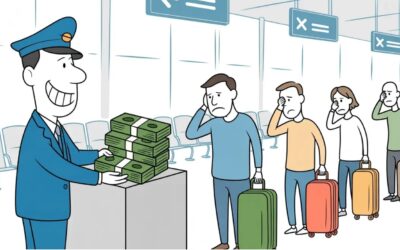
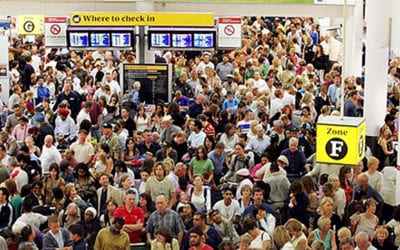

As I look at these swaps, it looks like the major airlines are working at making their fortress hubs more secure. In other words, they want to eliminate as much competition in their hubs as possible. That normally has meant that the consumers are ready to take it in the shorts with higher airfares.
====================================================
Name ONE HUB that doesnt have a Low Cost Carrier operating there?
US Airways virtual abandonment of Newark also seems to play into their coming alignment with Continental that dominates that hub.
====================================================
LCC abandoned EWR in the 90’s. Around the same time that Continental Lite ended.
First, you misspelled Reagan.
And second, it’s Washington National. The entire renaming was crammed down (unfunded) the throats of the local residents by congress. If you want to call it after a person, it was originally Herbert Hoover Field.
The misspelling is corrected. I’m sticking with Washington-Reagan.
@Frank
Easy CVG … Delta hub and some of the highest fares in NA.
Personally, I’m of the view that any new slots that open should be auctioned, particularly at peak hours at popular airports. The government and/or airport should also be able to charge a transfer fee when a slot is transferred from one airline to another. Making airlines pay dearly for the most coveted spots will obviously mean that these costs will be passed on to airline customers. I think that it should be much more expensive to fly from LGA to DCA at 8 a.m. on Monday, than at 8 p.m. on Saturday night – and usually it is. Take off and landing slots are valuable public assets, I don’t see why the public through the government should not get better value from them. If Congress charged the market value every time it transfers a federal government asset to a state or local government, or a private entity, we might have substantially less public debt in this country.
Matthew,
Great points. Hopefully, we will get someone in Washington to respond to this with the same thinking.
We’re working on it.
John August 26, 2009 at 12:32 pm
@Frank
Easy CVG … Delta hub and some of the highest fares in NA.
===================================================
LIKE I SAID, NAME AN AIRPORT WITHOUT A LOW COST CARRIER.
http://www.cvgairport.com/flight/airlines.html
It’s got five legacy carriers and USA3000.
IAH/Bush in Houston is essentially without a LCC. The closest I can see is Frontier.
http://www.fly2houston.com/iahAirlines
According to the timetable on frontier.com, they have 5 flights out per day (3 to Denver, one to LA, one to Seattle) and 3 flights in per day all from Denver. So you can’t even get a round trip IAH>LA or Seattle >IAH. I would not call that LCC service at IAH…